Without a sufficient amount of link authority, Google isn’t going to give your site the time of day. If it seems that despite all your content marketing efforts, the needle just isn’t moving in the SERPs, then you’re probably making one of these five avoidable SEO mistakes.
1. Hustling for likes instead of links
Your social strategy is misaligned if it is not connected to your SEO goals. It is not the likes, shares, or views that drive long-term visibility. It is the signals that persist, particularly links and references from credible sources.
A campaign can generate significant attention and still produce little SEO value if that attention is not directed toward an asset that can accumulate authority.
Consider how Red Bull approaches content. Its videos routinely generate massive reach, often attracting millions of views across platforms. But the strategy does not stop at distribution. Red Bull has built an entire media ecosystem around its brand, including owned properties where that content lives, is archived, and continues to attract attention over time.

Instead of treating each campaign as a one-off burst of visibility, the content becomes part of a larger structure. Articles, videos, and event coverage are organized in a way that allows them to be referenced, revisited, and linked to long after their initial release. That is what turns attention into something durable.
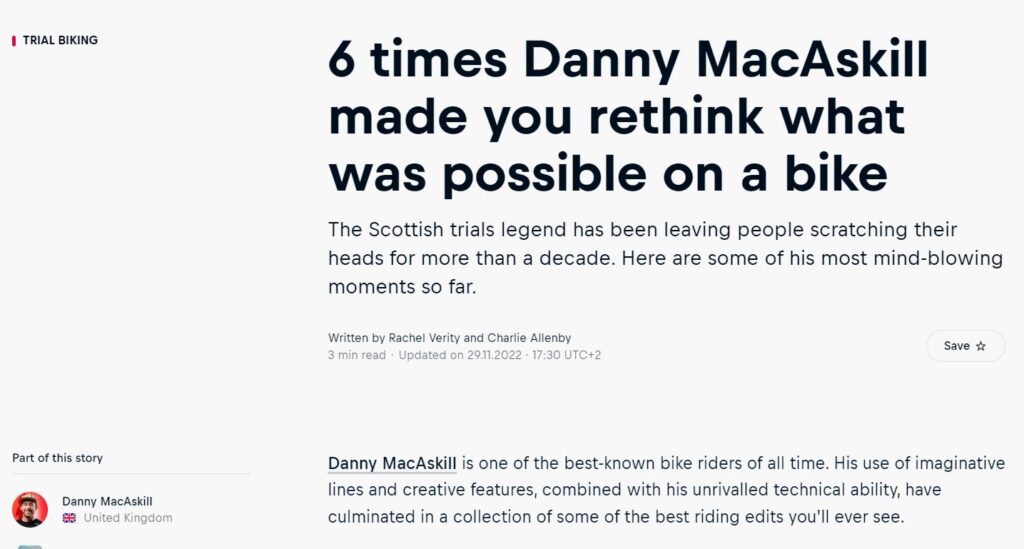
The distinction is subtle but important. A viral video on its own has a short lifespan. A video that lives within a well-structured content hub can continue to generate links, mentions, and traffic over time.
The takeaway is straightforward. Social platforms are effective for distribution, but distribution without consolidation does not build authority.
2. Misplacing the content
Remarkable content needs a home where it can deliver maximum long-term value.
When your best content lives exclusively on third-party platforms, the visibility may be real, but the authority accrues elsewhere. Publishing directly on platforms like LinkedIn can generate engagement, but it often leaves you without a durable asset on your own site. A branded content piece placed on BuzzFeed, for example, will not pass link equity back to your domain regardless of how much attention it earns. The links benefit the platform, not you.
A better approach is to treat external platforms as distribution channels. Publish your most comprehensive resources on your own domain, then use those platforms to extend reach and drive attention back to that resource. This principle applies whether you are producing written guides, video series, or original research. The deeper mechanics of social content strategy and how to align it with SEO goals are worth understanding before committing significant resources to any content campaign.
If your most linkworthy content is not strengthening your own site, then it is strengthening someone else’s.
3. Targeting the wrong audience
This can be tough to wrap your head around, but you may already be limiting your reach if your content marketing is laser-targeted to your ideal customer.
From an SEO perspective, your most important audience is not just your customers. It is also the people who create, curate, and reference content.
A useful comparison here is HubSpot versus Asana.
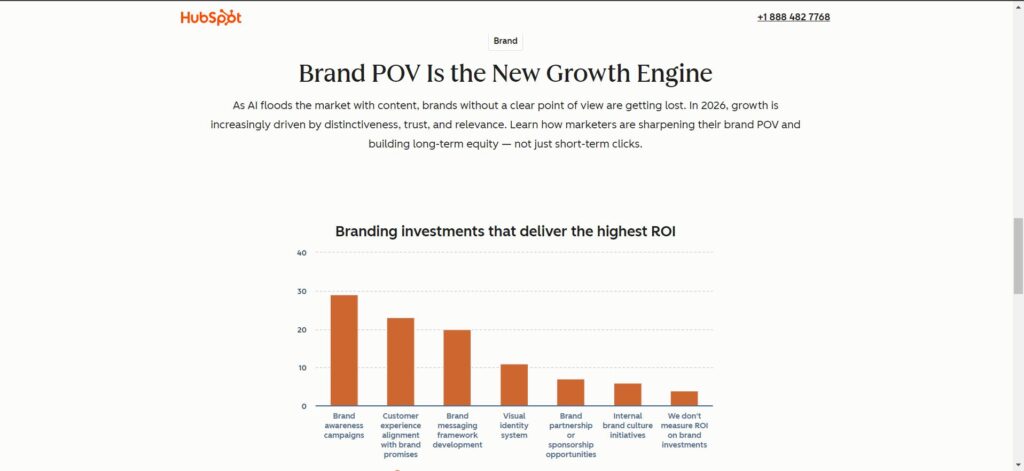
HubSpot regularly publishes assets such as its State of Marketing reports and marketing statistics pages. These resources are widely cited because they give publishers, bloggers, and marketers something to reference.
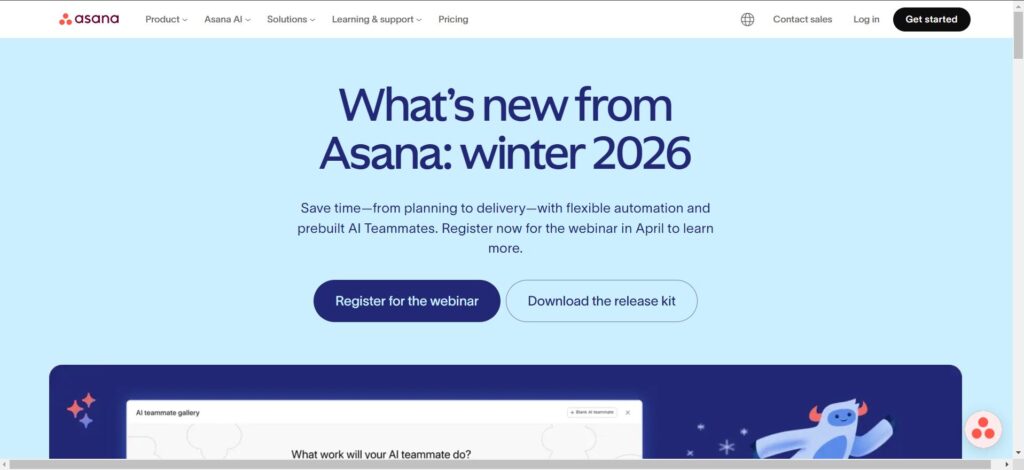
Asana also produces a significant amount of content, but much of it is product-focused, including feature announcements and updates. That content is useful for prospects and customers, but it is less likely to attract links because it does not serve a broader reference purpose.
Content written for buyers supports conversion. Content written so that others will cite it supports authority. Both matter, but they serve different roles.
4. Being activity-focused
Many SEO practitioners are task-oriented. They believe that because something is considered a best practice, it belongs on the to-do list.
That thinking leads to busywork.
Not all activities produce meaningful results. Some actions, like improving title tags, are important. Others, like endlessly refining low-impact elements, rarely move the needle.
Instead of focusing on tasks, focus on outcomes. Define a clear objective, align your efforts around it, and measure progress against that objective.
For example, creating the most comprehensive resource on a topic will have a far greater impact than making incremental updates across dozens of pages with little differentiation.
Progress comes from prioritization, not activity.
5. No help from a power user
Power users are a link builder’s secret weapon. Power users are bloggers, social media mavens, journalists or celebrities with a huge following on social media, and thus, huge reach.
The amplification that power users can provide is game-changing. You don’t need an army of them. All you really need is one power user in your hip pocket.
It can be a challenge to recruit that power user, but once you do, that power user can provide the initial push that starts the snowball effect you need to go viral. In fact, the primary reason for the success of the aforementioned LifeInsure.com campaign was a power user.
Be prepared to pay for that power user, either in cash or in favors. Nothing’s free in this world. If you don’t know how to find that power user, look to your SEO or social media consultant. They may already have a relationship with one.
Over the years, I have developed relationships with power users on reddit, StumbleUpon, Facebook, Twitter, Pinterest and Instagram, among others. Those relationships are worth their weight in gold.
Case in point: Power user Jeremy Schoemaker, aka Shoemoney, one of the most influential bloggers in the early internet marketing era. I asked, and he agreed, to run a contest in conjunction with my client, OvernightPrints.com. The campaign concept was that an entrant could win free business cards for life by designing Jeremy’s new business card.
His promoting the contest on his blog, on YouTube, and across his audience made a huge and lasting impact. That contest got my client to number two in Google for “business cards,” a term they had been buried deep in the SERPs for prior to the campaign. It remains one of the clearest examples I have of what deliberate influencer strategy, built on a real relationship rather than a transactional pitch, can accomplish.
Final thoughts
SEO is not about publishing more content. It is about publishing the right content in the right place, for the right audience, and ensuring it gains the visibility it deserves.
Links, references, and authority are not byproducts of effort alone. They are the result of deliberate strategy.
If your content is not producing results, the issue is rarely effort. It is usually direction.