In this Episode
- [01:29] – Where does having your own book fit into the equation of authority marketing? Adam lays out the map for us, explaining what authority marketing is.
- [03:01] – Adam talks about the difference between having authority and leveraging your authority.
- [03:03] – We learn that there are seven pillars of authority marketing: content marketing, PR and media, speaking, branding and omnipresence, lead generation, referral marketing, and events.
- [06:59] – Adam discusses content marketing, explaining that educating your clientele builds deeper relationships than advertising to your clientele. He also talks about the importance of being a “safe bet” for media.
- [10:16] – Stephan brings up another way to be a safe bet for media appearances.
- [11:56] – If you’ve already built up some authority, what are some things you could do to leverage this authority that you already have?
- [14:14] – Authority marketing is a marathon, not a sprint, Adam explains.
- [15:46] – How can someone successfully turn a blog into a book? As he answers, Adam explains what purpose a book should serve for your target customer.
- [18:54] – We learn about some ways to test your market inexpensively before writing your book. One strategy involves creating several book covers.
- [21:01] – Stephan recommends a free tool: answerthepublic.com.
- [22:49] – What is the process for turning a great idea into something amazing? Adam points out that there isn’t an exact formula to follow, but says he has some tips.
- [25:20] – Adam lists the tips he has just mentioned.
- [29:03] – A book can raise your credibility, and it can just as quickly destroy your credibility, Adam explains. He points out that your book has to look credible and professional, not self-published.
- [30:35] – Adam offers another tip about the power of a foreword and endorsements for your book.
- [32:34] – Adam discusses the strategy of paying to have a chapter in an anthology book with one major name on it. He recommends saving your money.
- [33:37] – Another of Adam’s tip is that when it comes to books, bigger is not always better. He offers the recommendation to aim for 30,000 to 35,000 words for your first book, or 120 to 160 pages.
- [37:10] – We hear some details on how you can thicken up a book.
- [38:37] – What would Adam recommend for Stephan, considering his book is over a thousand pages long?
- [42:09] – Adam offers another piece of advice: “bait the hook to suit the fish, not the fisherman.”
- [44:16] – Adam discusses the concept of selling something before you build it by talking about your forthcoming book.
- [47:39] – The book is the only form of media that has permanent shrines (meaning bookshelves and libraries) built for it, Adam points out.
- [49:21] – Adam shares a case study about a client who wrote a book on leadership development and the success he has achieved.
- [55:15] – How can listeners get in touch with Adam? As he answers, he offers listeners a free book, which you can get by visiting forbesbooks.com/marketing-speak. He also suggests taking their Authority Assessment.
Transcript
Are you ready to become an authority in your field? If so, you are in luck with this episode. We are going to dive into the seven pillars of authority marketing. Getting interviewed, getting on stages, getting a book published, getting it to become a bestseller. The guy who’s going to take us there is Adam Witty. He’s the CEO and founder of Advantage Media Group and of Forbes Books. Advantage has been on the Inc. 5000 list 5 out last 6 years. Adam has shared the stage with such great Steve Forbes, Gene Simmons of Kiss, and Peter Guber. Welcome to episode 101 of Marketing Speak. I’m your host, Stephan Spencer. Let’s get started. Adam, it’s great to have you on the show.
Stephan, thanks so much for having me. This is going to be a lot of fun.
It sure will. It’s going to be a whole bunch of knowledge bombs and gold nuggets as well, I’m sure. Let’s start with the topic of authority marketing and where does having your own book fit into that equation? I know it’s pretty important part of it, but it’s part of a bigger picture. Lay out the map for us, if you will.
Let’s start with this whole concept of authority marketing. Some of your listeners maybe have heard of that and may know what it is, and some of them maybe that’s not a term that they’re familiar with. Authority marketing, by definition, is a strategic and systematic process of positioning an individual or a company as an expert and leader in their community, in their industry, in their marketplace. Two real key words here are strategic and systematic. The reason those two words are in this definition is that there is a lot of people that have what I like to call latent authority. They have the credentials, they have the experience, they have the accolades but they don’t promote it, they don’t talk about it. Because of that, the consumer, the prospect doesn’t know about it and it doesn’t create an unfair advantage for that person or that company in the marketplace. Authority marketing is a strategic and systematic process of not only building authority of an individual in the company, but—I say this in a positive way—exploiting the authority to create an unfair advantage for the person in the company in the eyes of the consumer.
It’s not enough just to have authority, you have to leverage it.
That’s exactly right. There’s a lot of people that have authority but don’t leverage it. There’s others that don’t have a lot of authority but very deliberately take steps to build their authority brick by brick, and then of course they exploit it, they leverage it in the marketplace, and it makes them a celebrity, an expert, an authority in the minds of consumers which is a great way for them to generate leads and ultimately drive customers into their business.
Yeah, so they appear larger than life.
That’s exactly right.
What would be some of the things that they could do to appear larger than life, to really leverage the authority that they already have?
Within authority marketing, there’s seven different pillars of authority marketing. It’s not important that you exploit all seven pillars because depending on the business that you’re in and depending on the goals that you have for your business, some may or may not be appropriate. I’ll give you the seven pillars and we can dig into those. To answer your question from before, we can talk a good bit about how I book employees into authority marketing because it’s significant.
Perfect.
The pillars of authority marketing, these are in no particular order; content marketing, PR and media, speaking, branding and omnipresence, lead generation, referral marketing, and events. Those are the seven different pillars. The way that they can all work together is one obviously supports another, here’s a great example. A book is a piece of an overall content marketing plan. Of course, a book is content in published form. When you become an author, it makes you a whole lot more attractive to the media. Getting interviews, having stories written about you or your business, being seen as a thought leader, the book helps raise that thought leadership status which then makes you more attractive to media which in addition then makes you more of a person in demand to speak at conferences or events. As that authority halo builds from speaking and media and content, if leveraged properly, that’s a phenomenal way to generate interests for what you and your company do which can help drive your lead generation efforts.

It’s kind of like a perfect storm where something that’s feeding the other things, as you do one, you can do more of the others. And then as you do more of the others, you get more of the original one too. For example, if you have a book, you can get more TV appearances than if you didn’t. Once you have more TV appearances, you can get more speaking gigs. Once you get more speaking gigs, especially the bigger keynotes, you can get more TV appearances and you can get more book deals.
One thing builds on the other. They’re all interconnected.
Now, let’s say that we’ve got these seven pillars mapped out which are content marketing, PR and media, speaking, branding and omnipresence, lead generation, referral marketing, and events, we’ve got them mapped out. You haven’t decided to necessarily work on all of them because maybe that’s too much for the budget that you have and the resources internally. You decide to double down on the media side and the content marketing side, so you want to have potentially a book because that’s a huge credibility builder and authority builder. And then you want to leverage that book by getting PR and media, TV appearances, radio, podcast interviews, exclusives and magazines and all that sort of thing.
Yeah, that’s exactly right. Again, they build on each other. Let’s talk for a minute about content marketing. There’s a lot of different facets to content marketing. At the end of the day, in the age that we live in, there’s a lot of data and evidence to show that if you educate your clientele as opposed to advertising to your clientele, you’re going to build deeper relationships and people are going to be much more interested in what you have to say. It’s really creating pull marketing as opposed to push marketing. There’s a lot of different ways that you can publish content and share very valuable information with your target customer. We talked about a book, podcast which we’re doing right now, that’s a great form of content marketing. Webinars is another form of content marketing, articles, special reports, white papers if you’re in the B2B industry, of course speaking technically is a form of content marketing as well. Depending upon the business you’re in, depending on who your target customer is, there’s some forms of content marketing that are probably more likely to resonate with those people than others. Once you create more content that is more ubiquitous online and offline, that’s going to raise the attention of media. Of course, once you’ve demonstrated yourself as an expert, as a thought leader, as an authority through the numerous pieces of content that you published, of course now the media realizes that you’re a safe interview subject. One of the things that I teach the audiences that I speak to is you got to remember the media’s number one job is not to get fired. The way that a journalist gets fired is they bring on a guest to their show or they interview a guest that doesn’t have credibility, doesn’t have credentials, don’t know what they’re talking about, or it’s a guest that’s boring and doesn’t share great information with the viewer, the listener.
Or it’s a guest who is just horrible on media. They weren’t media trained, they’re awkward, they are looking directly at the camera and freaking out the audience, they’re staring at the audience. Those sorts of things come into play too.
They come into play all the time. When you have a book, it’s as if you’ve embedded and you now have a good housekeeping seal of approval. If you have your own podcast, it’s very easy for people in the media to say you know what, let’s listen to what he or she sounds like and let’s see if he or she knows what they’re talking about. When you’ve written articles, they can clearly read and look into your expertise. It makes you a safe bet. The safer you are, the more likely it is that you’re gonna get interviewed and picked up by media to be a source for the stories that they’re writing.
Another thing that helps make you a safe bet for the TV show host or the person running the radio station or whatever is that you have other appearances in a library on your website so they can see that oh, okay, you’ve already been on local TV. Let’s watch a couple segments, make sure that this guest is going to be good for my national show. Or if it’s a radio station, if they’ve had TV appearances, then they’re probably fine for radio because TV is even harder. That plays in as well. It not only builds authority, it builds celebrity. If you can get TV appearances, you can build on to get more TV appearances but it all starts with having a book really sets you apart. If you don’t have a book, it’s a lot harder to get on TV. You have trouble getting those local stations to say yes to you, TV producers, forget about it as far as the national shows unless you have worked your way up and have proven yourself.
No words said have been more true.
Let’s go back to one of my original questions which is let’s say that you’ve already built up some latent authority but you’re not leveraging it, what would be some of the things that you could do to leverage what you already have? Let’s say you have white papers, you have some of the content marketing pieces that you just described. What do you do to further leverage that and build on that?
There’s a number of things that you can do to start. When it comes to a book, I always tell people that the magic behind a book is that it is one of the most significant authority building tools available in an arsenal. You write the book on the topic. When you write the book on the topic, you’re the author of X, and someone will say here, she wrote a book on that. That immediately creates a high, high barrier. How do you use what you’ve already created? Well, we’ve seen a lot of authors take their blog content and ultimately leverage that and turn it into a book. A podcast can be transcribed and the content from that podcast can be used to form a book. Articles and white papers can be pieced together and sown together to create a book. If you have a lot of content that you’ve already created, you don’t necessarily need to reinvent the wheel. It’s often times likely that with some editorial massaging and good editorial direction, a lot of content that you’ve already written could be a significant part of your book. You don’t have to start with a book, it’s a significant way but you could host a podcast. You could write a weekly article, either on your own blog or perhaps for an industry trade journal, an industry that you work in. When it comes to PR and media, the big thing with PR and media is most people don’t really work at it. They hope and pray that the media will beat down a path to their door and find them, but the truth is to get media, you got to sell yourself to them and demonstrate that you know what you’re talking about. The key to building authority is largely that old fashioned thing called elbow grease and hard work.
Essentially, it’s proactivity versus reactivity. Rather than waiting for the media to come to you, you go out and seek the media and you do it in a very deliberate way on going and not just a one and done approach.
Yeah, one important point to share, Stephan, is that authority marketing is a marathon, not a sprint. You have to have an attitude that building your authority creates a significant, competitive advantage for you and your business over the long term. Everyday and every week and every month, you should be doing one or two small things that build authority. If you just expect to unleash a torrent of activity once and then never think about it again and expecting good results, you’re dreaming. See authority marketing as a marathon, something that you’re doing for the long term, and that you’re in for the long haul, versus a quick, short burst of energy that would be required in a 100 yard dash.
Agreed. Let’s say that you have been blogging for awhile and you want to repurpose that into a book or repackage that into a book, I can imagine that could go really well or it could go really badly depending on how you execute it. I know off the top of my head multiple authors who have done this, for example The Search by John Battle started as a blog, The Long Tail by Chris Anderson started as a blog and became a book. It can be done very effectively, but it can be messed up as well. What’s the difference maker there?
The difference maker is to begin with the end in mind. One of the biggest mistakes that a new author makes is they create a book that they want, but their target customer doesn’t necessarily care about. I would tell you that if your goal is to use a book as a marketing tool to grow your personal brand or to grow a business that you’re running or a partner of, you got to make sure that you’re creating a book that addresses a key problem or a key issue in the life of your target customer. If you think about that and put your feet in the shoes of your target customer, it’s a whole lot easier to think okay, what should my book really be about? It’s got to solve a problem, or create a solution to a problem, known or unknown, that your target customer has. The first thing that I always tell an author is begin with the end in mind. The next thing is to create a blueprint for your book, create a strategic plan. I always like to say that if you’re going to go build your dream home, you wouldn’t hire a general contractor and simply say build me my dream home. You would first work with an architect and you would carefully create a blueprint of the house that you desire, and then the architect would deliver the blueprint to the general contractor and that contractor would then build your dream home.
Great point.
The same thing is true with a book. You shouldn’t just start writing. You shouldn’t just start tying blog posts together. You should first create the blueprint, and that blueprint is being created with that initial question of what does my target customer need, what do they want, what problem am I solving for them? You’re creating this editorial outline of what your book is going to look like. Once you have the outline, which again is the blueprint for your book, then you’re taking all of the content that you already have, which could be an article, it could be a white paper, it could be blog posts, and then you’re tying that content in based on where it should naturally fall in your blueprint, and then where there’s holes, and there’s going to be holes, you’re going to have to create content to fill those holes and bridge the text all together.
Let’s say that you want to test the market, see if your book idea is something the market even wants, if it’s actually solving a problem that they want solved, what would be some ways that you could test that market, inexpensive, impromptu testing of your market? Maybe with different book covers or something like that?
You alluded to a great solution. I always like to tell an author to create two to three book covers with two to three different book titles. You have an idea for a book, but you’re not sure exactly what the twist is on the book or you’re not certain is this book going to really solve a problem that my target customer has? From there, you can create two or three sample book covers with two to three different book titles. And then if you have a blog, if you have a podcast, if you have an email list of raving fans, send that out to your list and say I’m working on a book concept, number one, which title and cover resonates with you? Number two, if this book became a reality, would you buy it? The answers to those two questions come from the market, not your family members. When you ask your family members, or when you ask your employees, the people that are dependent upon a paycheck from you, they’re going to tell you what you want to hear.
Yeah, so you can also laser target a particular market with Facebook ads. You don’t even need an email list, you could do some audience targeting with Facebook and test different ads promoting the different book titles and covers and see what the clickthrough rates are.
Yeah, that’s a great idea. Another along those lines is to also look at keyword search results. Depending on the keywords that may or may not be in the title of your book, you can easily see what terms are being searched for on Google to determine are there a lot of people that are looking for solutions on this topic?
Yeah, that reminds me of a really awesome, free tool called answerthepublic.com which when you put a keyword in will tell you all sorts of question based search queries that Google users type into Google. Let’s say your topic is downhill skiing, you might type in skiing into the AnswerThePublic tool, and then it comes up with all sorts of questions like where do I learn how to ski, how to learn skiing, what are the differences between downhill skiing and snowboarding, or between downhill skiing and cross country skiing? So many questions; who, what, why, when, where, that can help feed your ideas around the topic to focus in on for your book, but also for an FAQ page, for your website, for articles, for blog posts, for your own blog, for a blog that you contribute to. It’s a wonderful, free tool.
There’s a lot of really advanced tools that are available that make the author journey a whole lot easier today than it was even five years ago.
Yup. That’s a really great procedure or process for testing the market to see if you have a great idea, to Facebook ads, to email your lists, etc. Let’s say that you have a great idea, so you think, what’s the process to turn that into something that is not just readable but is amazing and is an idea worth spreading?
Herein lies the million dollar question. I will say a disclaimer to all your listeners that if there was an exact formula on how you turn a book into a runaway sensation and success, every publisher would use it. I will say that there’s a little bit of a fate factor, for lack of a better word, that goes into all of this. There’s a lot of evidence to prove that the bestselling books aren’t always the best written books, or even the most informative books. I think about Mark Victor Hansen and Jack Canfield with their book Chicken Soup For The Soul. I think about Rick Warren and The Purpose Driven Life, those are two books in particular that have gone on to sell millions of copies and no one would’ve predicted it. In fact, Chicken Soup For The Soul was rejected by the first 30 publishers that they pitched the book to, of course now the Chicken Soup For The Soul Series has sold more than 80 million copies. The Purpose Driven Life, the same is true, Rick Warren was rejected by a number of publishers before he found a home in Zondervan. I will say that this is obviously the tricky part. We were doing a podcast a few weeks ago with Jay Papasan who co-authored the book The One Thing with Gary Keller which has become a very well known business book. Jay was saying that for the first year of the book’s life, it did okay. Then, literally something happened and the sales number just started climbing and climbing and climbing and climbing. At first, Jay and Gary couldn’t really figure out why it was, why was it just incredibly having this growth in sales a year after the book had been published? I share all of that with your listeners to say that I wish I could give you an exact formula that you can follow. I have some tips that I think can increase your chances of success, but if I have the formula, well I guess we’d all be rich, right?
Sure. Let’s start with the tips then, let’s make it more likely than not.
The first thing, I mention it again, is begin with the end in mind. Number one, make sure a book is being written that resonates with the people that you want to impact and affect. Keep in mind that if you want to grow your business with a book, that could mean that your book should be highly targeted towards a very small and specific niche, and the book shouldn’t be written for mass consumers. That’s one thing to remember, selling books to the mass public is really hard work. There’s more failure than there is success, a whole lot more. We’ve always taught our offers, it’s this whole idea of the riches are in the niches. If you have a really well defined target customer, make sure your book is written explicitly for them. As soon as they see the title and as soon as they see the cover, it communicates that this is for them. A great example, one of our authors, he’s a consultant to dentists. He exclusively works with general dentists all across America. He wrote a book on how to grow your dental practice. It would’ve been very easy for us to take that book and really turn it into how to grow your business because all the principles that he uses to apply to growing a dental practice apply to growing business. But the only people that can give him money are dentists. He said well, why would I write a book for anybody else but a dentist, because they can’t give me money. I ask the question to authors all the time, are you writing a book to build your ego or are you writing a book to truly build your business? My guess is that most of your listeners that have a business or are working within a business, unless you’re Coca Cola, your target customer isn’t anybody that walks and breathes. Unless your target customer is anybody that walks and breathes, you’ve gotta make sure that your book is very focused and very funneled to that target customer. That’s the first tip in terms of success. The second thing that I would say is your mom said that a book should never be judged by its cover. I can tell you that mom was wrong. Every book is judged by its cover, whether that book is presented to you offline or even online. The power of cover design, the power of imagery, the power of the title, it’s never been more important. I always tell authors, especially if you’re self-publishing a book, make sure that you invest in having a great designer. That’s where a book is made, or a book is lost.
[bctt tweet=”Every book is judged by its cover, whether that book is presented to you offline or even online.” username=”mktg_speak”]Yeah, so many of the book covers out there, you can just tell that it was self-published just because of the way the cover was designed. It just doesn’t look as polished, certain publishers follow a formula for what looks right from a book cover standpoint. You break those rules and you stand out as an amateur.
Yeah. One of the things I oftentimes say is a book can raise your credibility and it can just as quickly destroy your credibility. If you have a book that looks self-published, you might as well not have a book at all. It’s not doing anything to help you. Your point is so important that your book has to look as good and read as good as any book you’d find on the front table at a Barnes & Noble. If it doesn’t, then it doesn’t pass the sniff test and it’s not seen as credible in the eyes of the consumer.
Or in the eyes of the TV producer, or the radio station producer.
That’s exactly right. The eyes of the buying public, whether it’s a journalist, whether it’s a customer, whether it’s a speaker’s bureau or a meeting planner. Your book has to look top shelf because every person in the world buys on perception.
Yeah, like when you mentioned the title of the book The Purpose Driven Life, I’m like yeah, I want that book. I don’t currently own it, and that sounds right up my alley. I don’t even need to see the cover to know that that resonates for me.
Yeah, titles are so important, covers are so important. I’ll give you another tip that is often times missed. It’s the power of a foreword and endorsements for the book. Depending upon your level of credibility, or your level of authority, we’re going to assume for a minute that one of the reasons you might create a book is to raise your level of authority.The big idea is when you have a person of very high authority writing your foreword or writing your endorsement, the authority of that person rubs off on you. It’s called authority by association. One of the often times missed marketing strategies with a book is to get a really big name, a famous person for that matter, in your space, to write the foreword and to write endorsements for your book. Because as soon as somebody picks up the book cover and they see it says ‘foreword by Steve Forbes’, ‘foreword by Richard Brunson’, ‘foreword by Jim Collins’, whether your book is good or not, people immediately assume it must be pretty good because Jim Collins said it is.
Books though, they’re kind of fake books almost in that it’s co-authored by a big name author and then a whole bunch of little guys that paid money to have a chapter in the book. They could say, “I co-authored a book with Steve Forbes.” Wow, that sounds really good, until you see the book and you just know it’s a racket that you paid for that opportunity. Is that something that actually works? It must work to some degree because there are businesses that do this and make a lot of money, apparently, doing it, otherwise they wouldn’t keep doing it.
It works to the degree that now you can say you have a book. The truth is that you’re really stretching the truth. My opinion, they’re called anthology books. As you mentioned, the concept is you have one big name and then 20 or 30 people pay a fee to contribute a chapter to the book.
Yeah, that’s right.
I believe that consumers can see through it. My professional recommendation is I say save your money and invest it in a real book.
Yup, I agree. Let’s go back to your tips here. One, be highly targeted, the riches are in the niches. Two, have a really great cover and title. Three, have celebrity or authority forewords and endorsements. Is there a four?
Yeah, there is a four. That is that bigger is not always better. There’s a perception that the bigger your book, the better it is. The truth is that when somebody looks at a book, there is a certain threshold that that book must meet. In the industry of publishing, we call it the thump factor. The thump factor is the sound that makes when you throw the book down on the desk.
I’ve got a great thump factor for The Art of SEO because it is a thousand pages.
See, this is a book that’s highly technical that you wrote, in which case there’s a much bigger rationale for such a thick book. But if you’re working on your first book, which is probably more of a general, evergreen book, then as a rule of thumb, we always tell people to aim for a 30,000 to 35,000 word manuscript because that is a manuscript that’s big enough where when it’s published, it looks and feels like a real book. But it’s not so big that it’s overwhelming to the target reader, in which case they say I don’t have time to read that.
This is a great point. A thousand paged book, in the case of The Art of SEO, is certainly the bible on the topic. But it’s overwhelming to potential buyers and our publishers asking that fourth edition, we cut it down by half, 500 to 600 pages max, because it will sell better. The previous editions actually sold better when they were smaller than this current edition, the third edition, which is 250 pages more than the second edition.
It’s such a great point. We live in a hyper ADD world. Your book is competing with a 20 minute podcast which is competing with a two-minute video on YouTube. You have to realize that people in general have shorter attention spans now than they did 5 years ago, 10 years ago, certainly 20 years ago. A lot of that is thanks to the device, the hand held iPhone or Droid or Samsung Galaxy. Shorter is often times better, as long as it meets that threshold of the consumer saying, “Oh, this is a real book,” but it’s not so overwhelming that they would actually want to pick it up and read it. I always like to say can your book be read in a plane ride? This is especially important if you’re selling to business people. But if your book can be read from start to finish on a 90 minute or two-hour plane ride, I think you’ve got a book that meets the objective and people will actually pick it up and read it and gulp it up.
Got it. A 30,000 to 35,000 word book might be how many pages?
That’s going to be 120 to 160 pages.
That seems like a pretty thin book, actually.
Yeah. 160 page book, this is where you can get creative with the formatting. What’s your trim size, is it a 6×9, is it a 5.5×8.5, is it a 5×8? Do you have pictures or graphics in the book? Do you have resources in the book? What is the leading, which is the line spacing between the lines in the book. There’s a lot of things that you can do to thicken a book up, but if you’re selling to busy business people, I can say that because most of the books that we publish are business books for business people, that 150, 160 page range, we’ve found that’s a magic number.
I have The Art of SEO, that’s a thousand paged book. What would be your advice to me to get in that sweet spot of 120 to 160 pages if I want a larger audience and I don’t want to overwhelm and intimidate the potential reader? It’s a great credibility builder, it’s certainly great for my authority to have a thousand paged book that I co-authored, the thump factor is great, but it’s just overwhelming and it doesn’t actually get read then. I give copies away to prospects and that certainly helps move the conversation forward. Invariably, they’ll never read the book.
Yeah. This one is a great example where I believe that thousand paged book is really two or three books. The first book, maybe you take a portion of those thousand pages and the title of the book is the beginner’s guide to SEO. For people that read the beginner’s guide at the end of the book, they have one of two choices. Choice number one is I’ve got all the information I need. If I want to go deeper, I’m going to hire… wow, this is the 101 version, I’m ready for the 201 version. Your next book is maybe the intermediate guide to SEO, and then maybe there’s a third book which is the master’s guide to advanced skills in SEO.
Right. If my target audience isn’t necessarily the SEO practitioner who’s just starting but more the busy executive, the CMO, Chief Marketing Officer, then it might be the busy executive’s guide to SEO.
That’s exactly right. Now, in the title, you’re suggesting exactly who the book is written for. It’s the busy executive.
Got it. Let’s say that with that busy executive’s guide to SEO, I’m going to have to trim out a ton of content to get from 1,000 pages down to 120 or 150, whatever. What’s got to go? Is it all the technical stuff, is it all the screenshots, illustrations, is it the industry trends and the prognostications of the future of SEO and of search engines, where things are heading. Is it all the above? This seems like a huge slash job to get rid of 900 pages, almost.
Let me give you a great piece of advice, and this applies to any author. If you have to put your manuscript or your book on a diet, the best person to do it is not you. It’s a ghostwriter or it’s an editor. You wrote every word, and it’s very hard for you to take something out because you know how much labor and effort you put into every single word. If we go back to that first book which is the busy executive’s guide to SEO, that 150 page book is really a cliff notes version. Then, the master’s guide to SEO, that could be an 800 page book because if you want to be a master, there’s a lot you need to know. But if you’re a busy executive and you just need to know the salient points, then we have the cliffsnotes size version which is the 150 page busy executive’s guide to SEO.
Yup, makes sense. Back to your tips, were there any others besides being highly targeted, great cover, foreword and endorsements, thump factor?
I would tell you that, and I mentioned this a bit before, but I just can’t emphasize how important it is. There’s an old saying, bathe the hook to suit the fish, not the fisherman. I remind authors of this one more time because it’s the most common error that I see. People write the book that they want to write. They write the book that’s in their heart, they write the book that they dreamed about, they write the book that’s been on their bucket list. The problem is if it’s not the book that your target customer wants to read, it’s all for not. Final tip I reiterate is remember that it’s not about you. The book that you create is not about fulfilling your personal goal in your bucket list, it’s truly creating a body of work that will help people solve problems for those people and help them live a better life, create a better business, etc. if we’re talking about non-fiction. Make sure that book is really written for the person you intend to have read it and it’s not written just for you.
Yeah, and if you’ve already written it or written huge chunks of it, you’re doing it wrong because you are putting the cart before the horse, you’re writing the book before you’re checking to see if the market even wants it.
That’s exactly right.
In the information products space, things like online courses, training on DVD and that sort of thing, it’s very common to promote the course, the info product, before you’ve created it. If you make enough sales, you create it. If you don’t, you don’t bother even creating it, you just refund the people’s money. Is there an equivalent to that in the book publishing space?
Yeah, there certainly is. It’s the concept of sell it then build it. If you have concern, fear, or just unknowing of whether or not there truly is a market for what it is that you want to publish, creating a book cover, creating a title and talking about your forthcoming book, talk about it in your marketing, talk about it on your blog, talk about it on your podcast or in your email communication with your list, with your audience, and see what people say. Are you getting people to say, “Oh my gosh, I can hardly wait until your book comes out. When is it going to be out?” Or does nobody mention it? You can get a sense of what kind of hype and what kind of buzz your book is creating within your audience, and that can create a very good sign of wow, I need to make this happen, or nobody even knows that I’m doing this and I’ve talked about it for three months. Maybe I should just kill it. The truth is maybe you should.
Right. One of my other episodes on Marketing Speak, I interviewed Nick Cownie. One thing that was genius that he does as a lead generation, lead nurturing tool for cold calling, is to call with a very small, easy to deliver request, which is I’m doing research for an upcoming book and I would love to include you in the book as stats and data—I forget exactly how he words it. That’s all in the episode, Episode number 87. He uses this gist of few minutes, can I get a minute of your time to answer this question for my upcoming book? It doesn’t mean that he’s going to necessarily finish that book, it certainly is way more credible if he’s already a published author, and he is. For his next book, he’s doing research and can I get a couple minutes of your time asking you this question, as a thank you, I’ll send you a copy of the book electronically once it’s completed. It’s a great door opener for cold calling, for having an excuse to get on the phone with the prospect. Then, he’ll move that to what he calls an insights call after that once their interest has been peaked. It’s really quite a cool technique but it wouldn’t really work if I’m working on a white paper, or I’m working on a blog post or something. I’d love to get some data and research from you for this blog post. It’s only legitimate sounding if you’re working on a book, I think.
The book has the cache and the sex factor that few other pieces of media have. That’s why the book works so well. It’s a very advanced strategy, what you just mentioned, but it’s brilliant.
One thing, I think that you’d mentioned this before when I heard you speak, a book is rarely, if ever, thrown away.
Yeah, let’s think about this for a minute. We have created permanent shrines to books. They’re called book shelves, and they’re called libraries. There’s no other form of media that has permanent shrines built. If you think about your own books, someone sends you a book and gives you a book as a gift, I’m going to bet my last dollar that you don’t throw that book away. If anything, you put it on your shelf, you give it to a friend or you donate it to the library during the annual library drive. Books have staying power that few other forms of media possess, which makes it a very stealth tool because if I send you a copy of my book, there’s a good chance that five years from now, that book is still sitting on your shelf eating up prime space in your office. It’s almost impossible to buy that kind of [00:55:42] with your target customer unless it’s through a book.

Yeah, very cool. Let’s wrap up this episode with an actual case example, whether you want to use a client that is targeting dentists or another one of your clients. Share with our listeners a success story, how they turned IP, intellectual property in their heads maybe in other forms like blog posts and so forth, into a book that then drove real business value for them.
There’s so many examples.
I’m sure.
My mind initially goes to a gentleman named Chuck Garcia. Chuck was a senior executive with Bloomberg and with Black Rock, which are two big Wall Street firms that probably a lot of your listeners have heard of. Chuck retired about four years ago after spending 25 years with those two firms, and he was playing golf like every retired person does. It was about two months into retirement and he woke up one morning and he said, “I don’t want to play golf anymore, I’m done. I don’t feel like I’m contributing in any way to the world, to the economy, to my community.” He kind of had a moment of faith, if you will. “What am I going to do with the rest of my life?” Chuck had been introduced to us a couple of months before. He called us and said, “Hey, I spent 25 years as a senior executive at one of the top companies in the world and I’ve got this great amount of passion and knowledge around leadership development. What could we do with that?” Fast forward, Chuck Garcia had climbed four different mountains. Kilimanjaro, Denali, and two other big ones. I said, “Chuck, why don’t you use rock climbing as an analogy to developing leadership potential in people?” He ended up writing a book titled, “A climb to the top. How to develop leadership skills in the people that work with you.” The book was written for executives in businesses that are growing future leaders, and he wrote the book for future leaders that want to grow at a business. He writes the book and then we say okay Chuck, you got to have a blog, you got to do a podcast on this topic, leadership development. As a result of the book, he was able to get a couple of interviews on Fox Business, he was able to get an interview on CNBC, he was able to get about 20 or 25 different radio interviews, and that then opened up a door for him to start speaking. He started speaking at a couple of conferences, initially he spoke at financial related conferences because his 25 years of experience was in the finance industry. Then, after he would speak at those conferences, he did such a good job at the speaking engagements that the meeting planner would start referring him to their friends. Now, instead of just speaking in the financial services industry, he’s speaking to all kinds of different companies. His book was discovered by a Chinese publisher, his book was published in Mandarin, he just returned a month ago from a 10-day book tour in China. In the Spring, he was invited to join the faculty of Columbia University as an adjunct leadership professor. Today, two years later after Chuck had that moment, he has written a book that’s been published in English and Mandarin, he speaks about 20 times a year, he has eight consulting clients where he’s helping companies develop leadership programs for their employees. He’s a professor at Columbia.
That’s a great story. The book itself is how many pages?
The book’s probably 180, maybe 200 pages. The title of the book is A Climb To The Top.
It’s a great title and it’s really important that the subtitle is there too so that it’s clear what the value proposition is. The title alone makes you do a double take and intrigues you, but it doesn’t give you the problem that’s being solved with the book. Very cool.
That’s right. The subtitle is ‘Communication And Leadership Tactics To Take Your Career To New Heights.’ It clearly communicates who the book is for. The last thing that I’ll say is that Chuck had shared with our team that the last two years have been some of the most gratifying and enjoyable years of his entire life because now he can give back, he can share his stories, his passion, his knowledge with others, and he’s getting paid for it at the same time.
If our listeners wanted to work with your firm and with you to help take something out of their heads and into a form of a book and help them be successful, build the authority marketing machine for your business, how would they get in touch with you?
The first thing I’ll say is any of your listeners, I had a free copy of my latest book available to any of them. The book is titled Lead the Field, How to Become an Authority and Dominate your Competition. This is a very short book but it gives a business person the 500 foot overview of why authority marketing is so important and how to implement it in your business. Any of your listeners can get a free book by visiting our website which is forbesbooks.com/marketing-speak.
Awesome.
If they go to that domain, they can request a free book and we’ll send it to them by US mail.
Very nice, it’s not just an ebook download. Most of those end up just sitting in the downloads folder; not just for me, but most of us.
This is a real book that I hope will have space on your desk or on your bookshelf.
Very nice. That’s a very kind offer. Listeners, do take Adam up on that one. What about working with your company, where’s the best entry point for folks who want to work with you? The next Chuck Garcia.
If we have a future Chuck Garcia waiting in the wings, I want to give you one other resource which is a great place to start. That is to take our authority assessment. The authority assessment is an online quiz, it will take five minutes for you to complete. It will generate a report that will show you your authority score and it will point out the areas that you can apply pressure to increase your authority. If you take the authority assessment, you can do so on forbesbooks.com/authority-assessment. For any listeners, if you want to contact me directly, I am always available and look forward to talking to listeners. I can be reached by email at awitty@advantageww.com.
Awesome. Thank you so much, Adam. Thank you so much, Adam, for sharing your wisdom and experience with our listeners. Now, it’s up to you, listener, to take this wonderful information and apply it in your business and become a bestselling author. This is Stephan Spencer signing off, we’ll catch you on the next episode of Marketing Speak.
Important Links:
- Adam Witty
- Advantage Media Group
- Forbes Books
- Twitter – Adam Witty
- LinkedIn – Adam Witty
- Email – Adam Witty
- The Search
- The Long Tail
Your Checklist of Actions to Take
☑ Discover my authority score is by taking an assessment on forbesbooks.com/authority-assessment. The results will help me strategize my next move for better publicity.
☑ Avoid being latent when it comes to sharing and promoting what I can offer to the community. Believe that I can provide solutions.
☑ Take in mind that it’s not enough to have authority; I have to leverage it so that I gain more trust from people who see me as an expert.
☑ Remember the 7 Pillars of Authority Marketing and choose what works best for my business. These are content marketing, PR and media, speaking, branding and omnipresence, lead generation, referral marketing and events.
☑ Building my authority is not a sprint, it’s a marathon. Think for the long term and devote a good amount of time on growing and improving every day.
☑ If my goal is to write a book, make sure that what I am creating will address a problem and provide a solution to my future readers.
☑ Target a very specific niche rather than addressing mass consumers. This will help me know who I’m writing and get better at catering to my readers’ needs.
☑ Before writing, research about what the audience around my niche needs. Use a tool called AnswerThePublic to collect answers.
☑ Find a professional publisher and work with them to bring out the best quality in my book. Avoid self-publishing especially when I’m aiming for media appearances such as TV and speaking events
☑ To learn more on how to become an authority in my field, grab a free copy of Adam Witty’s book Lead the Field, How to Become an Authority and Dominate your Competition on forbesbooks.com/marketing-speak.
About Adam Witty
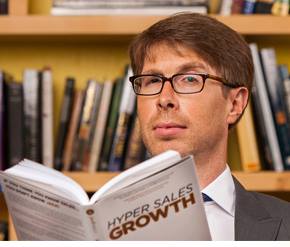 Adam Witty is the CEO & Founder of Advantage Media Group and ForbesBooks. Witty has built Advantage Media Group, The Business Growth Company™, into one of the largest business book publishers in America, serving over 1,000 Members in 40 U.S. states and 13 countries. Advantage was listed on the Inc. 5000 list of America’s most rapidly growing private companies five out of the past six years and named to the Best Places to Work in South Carolina list for 2013, 2014, and 2015.
In addition to his work with Advantage and ForbesBooks, Witty is a sought-after speaker, teacher and consultant on marketing and business growth techniques for entrepreneurs and authors. He has shared the stage with Steve Forbes, Gene Simmons of KISS, Peter Guber and Bobby Bowden. Witty has been featured in The Wall Street Journal, Investor’s Business Daily, USA Today and more.