In this Episode
- [01:03] – Rick talks about the fundamentals of Facebook advertising, pointing out that many people need to focus more on this topic. He then digs into the role of split testing in Facebook advertising.
- [03:28] – Is boosting posts a total waste of money, or is it better than nothing?
- [08:00] – Rick talks about how important the image in the ad is, and points out that it’s the first thing people will see.
- [09:14] – We hear about some other split-testing opportunities that Rick hasn’t yet addressed.
- [11:11] – How do you find out what the most resonant offer is, and expose what the ideal customer’s pain points and thoughts are?
- [14:51] – Rick addresses how little you can spend to find out whether what you’re doing is resonating with your audience. He then talks about what to do if you’ve bought “likes” on Facebook.
- [17:52] – Has Rick played around much with Ask Method?
- [21:18] – Rick takes a moment to talk about the information that Facebook has on you, and the opportunities that this presents.
- [25:55] – As a consumer, you can go into your Facebook ad preferences to delete or change things based on your interests.
- [27:41] – We hear more about what the future holds for sites that used to get a lot of organic traffic from Facebook and now need to do things differently?
- [30:57] – Rick shares his thoughts on whether the boosted reach of Facebook Live is going to continue or whether Facebook will dial it down.
- [33:36] – Facebook is trying to figure out whether you’re doing things with good intentions, or just trying to game the system.
- [36:00] – Stephan points out that Facebook wants to keep people within the platform, so ads that keep people in the platform are favored.
- [38:34] – Rick loves Messenger and thinks it’s the future from an advertising perspective.
- [41:17] – The things that Rick have been saying remind Stephan of the early days of email marketing.
- [43:34] – What is Rick’s tool of choice for automating Messenger conversations as much as possible?
- [47:10] – We hear about innovative ways to use video from Facebook Live or prerecorded video from other sources.
- [48:48] – Video is definitely Rick’s favorite ad format, he explains.
- [49:55] – Where can listeners go to learn more about Rick, work with him, get trained by him, or go through his membership program, where should they go?
Transcript
We have a great episode number 133 for you today, all about Facebook advertising. We’re going to dig into a whole bunch of tools, tips, techniques, tactics, and more with Rick Mulready as our guest. He is an industry leading authority on Facebook advertising, as well as the host to the highly-acclaimed podcast The Art of Paid Traffic. Rick, it’s great to have you on the show.
I am honored to be here. Thanks so much for having me.
Of course. Let’s start by talking about split testing and how that is an underutilized opportunity in Facebook Advertising. A lot of people are just putting ads up. They’re boosting posts, they’re doing the fundamentals, but they’re not split testing, and I think that’s kind of a travesty.
I think one thing you just touched on there is that, I think a lot of people don’t do the fundamentals, actually. They start boosting posts and stuff like that just sort of willy-nilly and they don’t really have a strategy behind it. Whenever I start talking to somebody about what they’re doing and they’re like, “Oh, I’m boosting posts.” “Okay. Why are you doing that?” “Well, I want more people to see my stuff.” “Okay. What’s the strategy behind it?” That’s what I’m really trying to get to the bottom of and I think it’s a missed opportunity that a lot of people have when it comes to Facebook Ads. What happens oftentimes is they try it because boosting posts, let’s face it, is a form of advertising. You’re paying money to get people to see your stuff, but it doesn’t work the way that they want it to work, because they don’t have a strategy, and then they say, “Oh, Facebook ads don’t work.” I would say starting with that in mind before you even get to the split testing part, but as you mentioned, Stephan, the split testing has become something that Facebook has recognized that they need to make easier for people and more accessible for people and letting the algorithm help with that split testing, build in that functionality into Ads Manager. Power Editor and Ads Manager are now merged, but they have rolled out some pretty cool stuff from a split testing standpoint. At the campaign level, for example, you can set a budget and let the algorithm optimize that budget across your ad sets, for example, which has always been a manual process. You can still do it manually, but you do now have the option of letting Facebook’s algorithm—let’s just say you put in a budget of $500 and you have 10 ad sets—optimize that budget across the best performing ad sets. That’s kind of cool. They also have started to roll out functionality as far as dynamic creative and you can do different variations of your creative. The stuff they’re rolling out is taking away the manual process of split testing, and it’s really letting the algorithm find you the best combinations so that you can get the best results possible.
Let’s jump back for a minute to the boosting postings, and we’ll come back to split testing. The boosting posting, is that something that is a total waste of money and you should come up with ad sets, do the work, and figure out the audiences that you want to target and do forth, or is boosting post better than nothing?
Booting post is certainly better than nothing. If you had asked me a couple of years ago, I would say definitely stay away from boosting a post. However, that’s kind of changed because they have made advancements in what you have available to you when you boost a post. I still—if you have a post in your page that is doing pretty well that you want to turn into an ad—go into Ads Manager and work from within there. You have a lot more flexibility in what you can do with that post. Now, with that said, if somebody has not bought their fans, and their targeted fans on their page, and you want to start testing to see which kind of posts are resonating with your audience, a great way to do that is with boosting. You don’t have to spend much money, hardly any money, in order to get in front of your fans like that to kind of see, “Okay, this kind of messaging for this kind of offer seems to be resonating with my audience. I want to turn that more into an ad because boosting is an ad, but I’m going to do more with that strategically.” Again, the big thing that people mess with boosting a post is that they just do it just to get more people to see it. I remember a conversation I had with somebody at conference. It was back in December and he comes to me and he said, “I just became a student of yours,” and it was like, “Oh, thank you so much,” and I am kind of learning a little bit more about what he’s doing, and he said, “I boost seven posts a week and I boost them each for about seven days.” I was like, “Okay, great that you’re doing that. Why are you doing it?” It was the inevitable answer of all, “I just want more people to see my stuff.” Okay, great, but there’s got to be a strategy behind it. For example, if your goal is to get more people to see the post so that you can kind of gauge and test to see what types of posts as I was mentioning before are resonating with your audience, so you can hone in on that particular offer, copy, or image, great, that’s a strategy. Or maybe you’re putting these posts out there to build your engagement audiences. You can build an engagement audience, for example, of people who are engaging with your Facebook page and your Facebook post, so that you can then turn around and retarget those people later. That’s a strategy, okay cool. I’m cool with boosting a post. But if you’re just boosting it just to get more people to see your stuff without any strategy behind it, that’s where I have the issues.

That makes a lot of sense. If you have strategy, then you’ve dialed-in your audience targeting and not just left it up to Facebook with the boosting post.
If you’re boosting, it does gives you options for targeting. You target obviously your fans or friends of fans or you can do your warm audiences, you can do a little but of cold targeting there, but it really does come down to understanding who your target audience is. That’s a whole other thing that a lot of people will say, “Oh, yeah. I understand my target audience,” but when you really dig into it, they don’t have a very clear understanding of their target audience. When it comes to Facebook ads, you’ve got to have a holistic understanding of your target audience. What I mean by that is more than just men between 18 and 35 who are interested in XYZ. You’ve got to have more interest in that. I like to use a yoga example. If I’m in the yoga niche, then I’m going to be women between, let’s just say, 25 and 50 are going to be my target audience who are interested in yoga. But then, let’s take it a step further—this is where we start to get the kind of holistic approach to it—what types of brands do they purchase? Where do they shop? What types of hobbies are they into? They might be buyers of Lululemon clothing or Lorna Jane. Maybe they shop at Whole Foods, that sort of thing. Taking a step back and thinking about your target audience from a holistic level, so that you can use Facebook’s targeting opportunities to your advantage.
If the strategy is in place, you’ve done better audience targeting than just kind of blindly boosting the post and then choosing your fans or friends of your fans. If you also do stuff like split testing the image rather than just boosting the post with the image that’s in the open graph tags of that blog post that you wrote, maybe a better image might be something other than the stock photo that you’re using.
Yeah, absolutely.
Let’s talk about split-testing images. But first of all, how important is the image in the ad?
Extremely important because that’s the first thing that people are going to see as they’re scrolling through their newsfeed. Whether you’re doing a video or an image, that has to capture people’s attention. We’re all scrolling through the news feed super quickly on our phones and we have to get their attention so that they stop on our post. It’s extremely important without being overly annoying—let’s just say if we’re talking about images—to have something that represent whatever your offer is, represents your brand, your business, whatever you’re giving away, or whatever it is that you’re marketing in your ad, obviously relevant to that, but also it’s going to catch their attention. It’s very important to be testing. Don’t get romantic about one specific image. Don’t be tied into that one image because you’ve got to be testing different things. Oftentimes, it’s the ones that we don’t think are going to do the best, that do the best. You’ve got to be testing multiple images.
That’s part of your strategy and that’s what’s oftentimes missing then people are simply boosting posts.
Yeah, exactly.
What would be some other split test opportunities that are underutilized that we haven’t talked about yet?
The headline obviously is very important, too, because that’s the largest font size in the ad, and that’s going to be the second largest thing, if you will, in the ad besides whether it’s the image or the video. So, the headline is important. When it comes down to the copy, it’s what is your offer? How are you getting people’s attention? This is really where it comes down to understanding your target audience. Understanding your target audience, how you can specifically help them, and what is the offer you’re putting in front of them. When I say offer, that could mean a paid offer. It could be something that you’re actually selling or it could be something that’s free, whether it’s a downloadable PDF or whatever, a webinar, whatever it is. Really understand your target audience so you can speak to them specifically and the benefits of whatever your offer is. Again, don’t be so romantic in the offer you are making because maybe your target audience is really dialed in, but the offer that you’re putting in front of them and how you’re communicating that isn’t something that they necessarily want. This really comes down to understanding your target audience, where they are in the customer journey in your business, or making offers to them that are most helpful to them where they’re at in that journey. Again, you might think that people are at a specific point and you’ve got this great offer that you think is great. You put it in front of them and maybe it’s not working. Well, look at that offer. Is there something maybe you can tweak on it or maybe it’s something that’s completely different? But people get really caught up in like, “Okay, I’m only going to do this one thing,” and they’re not willing to test other things and that’s something that often gets overlooked.
How do you find out what the most resonant offer is? Do you do a focus group for example? How do you expose what customer journey is and what ideal customers’ pain points and thoughts are?
It really comes down to that first thing I mentioned, it is understanding the target audience. If you’re not really sure what their pain points are, there’s all kinds of different ways. For example, if you have an existing customer list and maybe you know who your ideal customers are and they’re already in your business, they’re already customers of yours. Get on the phone, or get on Skype, or get on whatever to talk to them. If they’re local, meet up with them for coffee. That sounds kind of weird, but the more that you can have these conversations with your ideal customer, you get to learn so many different things. You get to learn those pain points. You get to learn what they’re struggling with and how maybe they have benefited from your business. You get to hear the language that they’re using. So many people want to know how to write the ad copy. Listen to your customers. That’s your ad copy right there and so much more. That’s your copy for your landing pages or sales pages. The more that you can have these conversations with your customers, to learn exactly what is going on for them, why they purchase from you, you can use all of that in your testing and in creating your offers. Now, if you don’t have customers yet, maybe you have an email list where you can get feedback from people on your email list. Let’s just say you don’t have any of that. Facebook groups, there are so many Facebook groups that I’m sure that people’s niche is represented in many different Facebook groups. You could go to find those groups, hang out in those groups, add value where you can and you can see the types of conversations that people are having that is your target audience, what types of problems are they talking about, what challenges are they talking about. That is going to give you some great insight into the types of offers that you can be testing to help those people. Again, there’s the language right there that they’re using that you can be using in your ad copy. Go into conferences. Are you part of associations? Listen to these conversations, listen to that your target audience is saying, and whenever possible, talking to them is going to help you a ton when it comes to what types of offers to be creating, so that you can be testing with that. Now, once you come up with a couple of different offers, it’s just a matter of, at that point, dialing your target audience, using Facebook’s targeting there, but really dialing in that audience and then saying, “Okay, I’m going to start with this offer. I’m going to put it in front of them and see how it does.” You don’t need to spend a whole lot of money in order to gauge whether the offer is resonating with them. It really comes down to though, Stephan, is using Facebook’s stats to start to help you understand. I like to say diagnose what’s going on with the ad. Let’s just say you have great click-through rate, your cost per lead is really good, you have a high relevance score, that’s telling you some things that this is resonating with your audience. If you have a crappy click-through rate, a high cost per lead, maybe a high cost per click, and a poor conversion rate in the landing page, you’ve got some problems there. You need to start to diagnose and troubleshoot what’s going on there. Using the stats to diagnose and start to paint the picture of what’s going on there because that is what is going to ultimately tell you whether what you’re putting in front of your target audience is resonating with them. The other thing that makes it a little bit more challenging is that maybe the offer in the ad is really good, but the target audience that you have set up leaves a little bit to be desired.
If not spending much money to see if it’s resonating with the target audience, how much is not much money when you figure out if this is working or not?
You can be spending $10 a day. You kind of get into things like how much budget you have, audience size, and all that stuff, but I would say for as little as $10 a day, you can be finding out whether it’s resonating or not. Now, if you go the boosting post route like we’re talking about earlier, and let’s just say you start testing these different offers that you put together with your Facebook fans there, you could be spending literally $2-$3 a day. Just a few dollars a day to start to get some, “Well, am I getting engagement? Am I getting the kind of traction here with these ads?” Just testing any low-budget targeted environment. Again, as long as you didn’t buy those fans—
What if you did? What if you bought some fans? What if you paid Facebook for likes because that was your targeting criteria, let’s buy some likes and now you have a whole bunch of likes from Bangladesh and these people are not engaged.
If you’re buying likes and you don’t feel they are your target audience, then I would not be boosting posts to them. I would not be using that information and that data. It’s not going to be solid data. If there are untargeted fans on your page, I wouldn’t go down that route.
What do you do though? Do you have to start over and create a new Facebook page? What do you do?
It all depends because people might be thinking like, “If I had thousands of these people that are untargeted fans on there, what am I going to do?” I wouldn’t necessarily do anything about it. You can go there and clean them up. You can go in there and start deleting people. Unless if the entire account is like that, I don’t think it’s necessary to be starting fresh, starting brand new. But if it’s just a small portion, I wouldn’t really worry about it. Again, you can go in there and start cleaning things up, but as far as testing goes then it’s a matter of, “Okay, I’m going to do my testing within Ads Manager and get as targeted as I can with my audiences.”
You can actually delete individual fans?
I’m not an expert on the Facebook fan page, but that’s my understanding that I can go in there. This is something that came up for us years ago, we were able to clean that up with very little problems.
Okay. Cool.
I could be wrong. Maybe they changed that more recently in the past couple of years, but was something we did a long time ago and we were able to do that.
You’re talking about talking to your existing customer base, getting on the phone with them, meeting them for coffee. What about ask surveys, ASK Method, Ryan Levesque. That may take the form of sending an ask survey via email to your email list, maybe even a pop-up with some sort of an invite for the visitor to take a survey on SurveyMonkey. Have you played around much with the ASK Method?
Absolutely. The more that you can segment, the better. I think it was a year ago that people were saying that segmentation is the future. Well, it’s always been this way. It is about putting the right message in front of the right person at the right time, that’s segmentation. The more that you can segment and the more that you can learn about your target audience that you can better serve them, the better. Ryan’s ASK Method is really good. That’s going to allow you to do many different things there. Number one, it’s going to allow you to segment people, obviously. Number two, if you’re tagging people, you could be building those segmented list in your email CRM, which you can then upload those segmented list into Facebook. Then you can start to target the people as custom audiences, so that you can either cross-promote, upsell, or continue to add value to those very segmented people. That’s obviously a benefit there. You’re having conversations with them in a segmented way or in email marketing as well, because again, you are finding where they’re at, segmenting them, and having those specific conversations. The other thing, too, is you’re just learning a ton of information about who your audience is, so you can best serve them. I say, anytime that you can be segmenting—you’re not doing it every week—kind of consistently doing on a regular basis, the more that you can learn about your audience and leveraging that information in a way to best serve them, the better.
By targeting these visitors, customers, and email list subscribers, you can find out what to write about in the ad copy, on the landing pages, blog posts, and so forth, as long as you have it an open-ended questioning sort of way. We’re doing this right now with a client of mine and he’s gotten so much valuable data in the last couple of days even, just 1500 or so survey entries is a lot of traffic. These are ideas, “Why did you come to the site? What are you looking to accomplish? What are your biggest challenges?” Not multiple choice, but let them type in what’s going on for them, and we get all of these incredible ideas.
Is that a pop-up or something on the site?
Yes, he does have a pop-up and he’s inviting people to take a SurveyMonkey survey which is based on the ASK Method.
Very cool. Is he incentivizing them?
No.
Wow. 1500 responses is pretty good in a few days.
He’s got a lot of traffic.
That’s really good.
A lot of traffic. It’s pretty cool. Having this kind of data repository to draw from and pull ideas for ads, for landing pages, for blog posts is super, super important. Another thing, too, I think is surprising for some people is Facebook has a lot of data on you that is based on your behaviors, it actually labels you as liberal or conservative, how liberal or conservative you are. You can see this stuff. It’s buried in the settings where you can see the labels of these different things. You want to talk a bit about that and some surprising opportunities for folks that don’t realize what’s in there?
There’s this big uproar about privacy and with the whole Cambridge Analytica thing that happened. I have no affiliation with Facebook whatsoever and am I a little bit of a Facebook Homer? Yes, because I know what the opportunity is with Facebook. Does it sound like they messed up a little bit? It does, but I think what’s being missed by so many people, especially with the media is that when we signed up for these platforms, we agreed to this stuff. I’ve been in advertising for over 18 years now. I started back at AOL in 2000, this is back when we’re still sending out discs in the mail to connect to AOL, and the annoying dial-up sound when you connected to the internet. As far as targeting and stuff like that, obviously targeting has come a long way. But when you go online, this is the sort of the price that you pay. I’m not anti-privacy in any way, I’m just saying that I think what’s being blown out of proportion is that when people use apps, when people go on Google, when people go on Amazon, when people go on on all of these platforms, they’re collecting information to serve, obviously, advertising to you. What happens when you buy on Amazon? You buy a protein bar or something and it says, “You might also like XYZ.” Well, what do you think is going on there? I think this is a good thing from a cleanup perspective in what’s going on in the industry right now where all these companies are sort of taking a look at it and cleaning things up, making the privacy policies and the privacy settings a little bit more easy to navigate and to set. If we’re going to be online and taking advantage of the opportunities that we have online, this has been going on forever. If we’re not okay with it, then don’t do it, don’t agree to stuff. But everyone does agree to it. We oftentimes don’t know what we’re agreeing to. No one ever read the terms of service, correct? It’s just the reality of it. Again, I’m not anti-privacy at all. I’m just pretty passionate about when these companies are getting beat up. Granted, there are times when things should have been dealt with differently or caught sooner. I completely agree there, but I just think that when we don’t fully understand the full story, and when you go on to Facebook or go into an app, for example, and it says, “Do you want to connect through Facebook?” And there’s terms and stuff there and you’re agreeing to it, you are agreeing to it. If you don’t don’t want to agree to it, you don’t have to do that. Going back to your question about the opportunities there, that because a platform like Facebook knows so much about us because of all the data that is in there, as an advertiser, I would much rather be served an ad that’s relevant to me than something that is completely irrelevant to me. Again, I’ve been in this space for a long time now, and we all know what it’s like to see ads that are completely irrelevant to us. Advertising isn’t going away. I would much rather have something that is completely relevant to me or pretty relevant to me, than something that’s completely irrelevant to me. As advertisers, we have the opportunity to get very targeted with our ads on Facebook because of the data of all the users, the 2 billion plus users that are on the platform. I think there’s amazing opportunity there. I saw an article today about Lord & Taylor or something like that. They had 5 million pieces of information stolen or something like that, hacked or whatever. This is happening all of the time and some things are more prevalent in the media as opposed to others. I think it’s a good thing for the industry. I think that these businesses and companies are taking a closer look at their privacy, cleaning things up, which is a great thing. But I think in a matter of a couple of months that we’ll be on to the next topic.
Yeah, I think so, too. If you’re targeting people based on how liberal they are, how conservative they are, it actually makes a lot of sense because you don’t want to put an irrelevant ad in front of people.
Yeah, exactly.
If you’re, on the flip side a consumer, and you’re a Facebook user going into your ads settings or whatever and deleting that label of liberal, you’re going to start seeing a lot more pro-Trump ads and you’re not going to like that. So, maybe you should just leave that alone.
That’s right. Exactly. You can go in there and clean things up, and you’re like, “Oh, I didn’t even realize that this is showing as an interest for me,” and you can delete stuff. You’ll see how your advertising will shift when you do that. Just like you just said, maybe you won’t like that if you do that.
Now there is a huge Facebook algorithm update last year that a lot of sites, especially the very conservative kind of news sites—maybe I’m using the word ‘news’ a little bit loosely here with those sites—they got hit big time. They lost a lot of their traffic. Can you talk a bit more about that and what the future holds for sites that used to get a lot of organic traffic from Facebook and they are getting things differently?
This was the announcement that Mark Zuckerberg came out in January. It just said basically that they’re trying to go back to their roots, if you will. They’re trying to stop the spread of fake news and manipulative stuff, engagement-baiting and all these other stuff, click-baiting and stuff. It was another effort to clean up the platform. Again, this is a good thing. What happened was the shifts that happened or they’re prioritizing the content that not only is being shared with friends and family and that sort of thing, but content that was being seen as valuable. They were judging that based on the types of comments and sharing and stuff like that, and when this whole thing came out in January, they said that this is going to be a work-in-progress. We’re going to be seeing how this works, and how we would like it to work, and kind of make changes as it goes along there. The reason that a lot of these sites that were relying on the organic traffic took a big hit is that a lot of the stuff that was getting this traffic was very engagement-baity. They want genuine content. They want content that is going to be helpful to people, that’s adding value to people, and people who want to then share with their friends and family or colleagues. I think that a lot of the content that a lot of the businesses that were in the sites that we’re relying on the organic content, they weren’t—I don’t want to make a blanket statement—of maybe, it wasn’t the highest value stuff, but organic content, organic reach with your content hasn’t been high for a long time on Facebook. Honestly, this really shouldn’t be a big surprise. It’s been a pay-to-play platform for a few years now. The organic reach has been steadily going down. It’s never been more of a pay-to-play platform than it is now and has been for the last several months. If you want to take advantage of the 2 billion plus audience on there, and the leverage of the targeting that you have available to you, you’re going to have to pay to be able to do that. I think it’s a matter of not putting all your eggs in one basket and really still understanding the opportunity that exists there. If you are going to be putting content on there—I’m a huge fan, as is Facebook of Facebook Lives— the Facebook live video. They still love video on there, obviously, and that’s going to get higher play in the news feed there from an algorithm standpoint and approaching it from an adding value. How am I adding value to my target audience? How am I helping them, and providing that type of content that is going to be hopefully seen as that value-driven content that people want to share with their colleagues and friends, so that they could help other people. That’s the type of thing that Facebook wants on there.
[bctt tweet=”If you want to take advantage of the 2 billion plus audience on Facebook, and the leverage of the targeting that you have available to you, you’re going to have to pay to be able to do that.” username=”mktg_speak”]Facebook Live is kind of a secret weapon, that’s not so secret. Get a lot more reach than just uploading a pre-recorded video. Is that benefit or that extra boost going to continue, do you think, or will Facebook dial that down?
No, I think it’s going to continue. I really do. Someone said to me the other day that they heard that the reach for just regular type of video that’s being uploaded directly to Facebook has been going down, I haven’t seen that at all, nor have I heard anything about that. Zuckerberg came out a couple of years ago and said in the not-so-distant future, he saw a platform like Facebook and I’m hearing more and more this about Instagram as well, that it’s going to be primarily a video platform. We’ll see about that. I don’t see that changing, and what I think about as far as Facebook Live is that, Facebook likes video and when you use their tool to do live video on their platform, they like it even better. That’s why it’s going to get higher play. I can hear people saying, “Why should I have to do something like Facebook Live in order to get more people to see my stuff?” We have to remember, and it kind of goes back to what we were talking about earlier, Stephan, with the algorithm update is, we’re in Facebook sandbox here. If we want to be in there, we’ve got to play by their rules. We don’t pay to use the platform, unless we’re doing some advertising, but it’s not like we’re not paying a fee to log into Facebook and to be able to share stuff. If we want to be on there, we’ve got to play by their rules.
Facebook Live, great opportunity, it’s important for the listener to understand that the Facebook Live needs to be posted to their page, not to their business page if they want to advertise and drive more traffic to that Facebook Live versus through their profile.
Correct. You’re doing the Facebook Live on your business page. This is another great way of testing different things. If you do a Facebook Live on your page about whatever kind of topic and you have a call-to-action in there, generally Facebook Live is going to get higher engagement, and that engagement is going to help, again, more people to see that and if it is getting good engagement and good reception, then you can turn that into an ad, but yes, you’re doing the Facebook Live on your page and not your personal profile.
There’s some tricky stuff that people are doing like saying, “Hey, type ‘I’m in’ in the comments below and let me know that you want to participate in this cool free five-day challenge,” or whatever and Facebook is now onto that technique of “I’m in.” It looks like there are tons of comments and stuff, but people are just opting-in that way or like taking a survey and saying, “Hit love if you’re this type of person, hit the wow if you’re this type of person,” in the Facebook Live to try and somewhat artificially drive up the likes, the hearts, and all that sort of thing.
It goes back to that engagement baiting. Are you doing things with good intention or you’re just trying to game the system? That’s what Facebook’s trying to figure out. It goes back to, also, with a similar thing like you said that’s like putting a comment in there when you’re doing Messenger. You can do something like ManyChat, for example, where if you people commenting a specific word or phrase in the comments there, that can trigger Messenger and a message pops up based on whatever it is that you’re talking about. You can’t do that anymore. That’s against their terms where, again this goes back to that engagement baiting, are you doing things with good intention? Now, what you can do though is you can ask a question and let people know, “Hey, comment below or post your questions below,” or whatever. They’re trying to get away from just put one word below to, as you mentioned, Stephan, to sort of game the algorithm, if you will, or to start a desired action from Messenger. Facebook wants to get data, basically, use this data to again, better be serving people the right types of content, so the more information is in these comments, for example, the more helpful information, the better it’s going to be.
Engagement baiting, that’s not a good thing, not sustainable. But on the flip side, if you get no engagement on your ads, in terms of nobody is commenting, nobody is sharing your ad, very few likes, you’re getting some clicks, but that doesn’t look that great of an ad to Facebook, right?
Correct. Again, this goes back to Facebook is trying to protect the user experience at all cost because it knows that its customers are not the advertisers. Yes, the revenue is coming from the advertisers, but its customers are its users. Without the users, there’s no advertisers. The whole goal here is to be providing a good user experience and with that is good content. One of the things they use to gauge that is like you just mentioned, are people engaging with the ad? Are they sharing or are they commenting on it? And they liking it? That sort of thing. If no one’s really doing that, that’s when you’ll see a lower relevance score, higher cost. Your reach will dip at that point because the algorithm is picking up that this is not something that the audience is resonating with, so we don’t want to show it as much because it’s not as good a user experience as we want.
If you’re just thinking about Facebook as an entity that’s got their own best interest at heart, they want to keep the users in the platform. When you are buying ads to drive people out of the platform versus keeping them in the platform, so buying ads for the purpose of website clicks versus video views or likes or whatever it is, if you’re keeping them in the platform, the cost will be less and Facebook’s going to favor those kinds of ads, right?
I would say that, it’s a lot less than it used to be. It used to be years ago, where if you could have a landing page, for example, within one of Facebook’s tabs on the page and draw people there, Facebook preferred it because again, you’re keeping people within the platform. I think, obviously, from a video views perspective, for sure. If your objective is to get people to watch a video, then video views is the objective, you’re watching it right there in the platform. That’s what they want. There has been a big shift over the past few years, though, as far as sending people to a landing page outside of Facebook. I don’t see it as big a factor as it used to be. They did introduce a couple of years ago, I think it was, lead ads. A lead ad basically looks like a regular type of ad in the news feed, but when you click on it, it pops open like fields, so that the whole exchange is right within the ad unit right there. They don’t leave the platform there. There’s mixed results. We’ve tested lead ads. We’ve had okay results with it, but basically what it is, is you can set up what fields that you want to ask. First name and email address, okay cool. If that’s what you’re asking, it auto populates with that information based on that Facebook user. That’s good. It’s a very seamless experience, but it’s just about testing. Again, we’ve seen sort of mixed results with that. I have tons of students that have seen great results with it. I have tons of students who, it just doesn’t work for, that they get much better results sending people to a landing page and getting people to opt-in or download whatever it is there. So, really, it is all about testing, but yes, Facebook does prefer if you are staying on the platform and spending time there, because when you do that, that’s the more content that you’re going to consume and the more ads that you will see.
What about using Messenger as the desired action, like somebody instead of filling out the form inside the platform for a lead ad, they’re engaging in a conversation on Messenger?
I love Messenger. I really do think it’s the future here. It’s so new from an advertising perspective. I was just in a Facebook group yesterday where people are going off about Messenger. It was very interesting because I was listening to what they were saying and what was annoying them about it. I just kind of chimed in, I said, “Look,” I said, “I totally get what you’re saying.” They were saying that they thought it was going to be a flash in the pan. I disagree. I do think that it really is the future. Platforms like Messenger, WhatsApp, and all that stuff is only growing. It’s an amazing opportunity to have one-to-one conversations. What people were saying that they didn’t like is that they’re just getting pushed messages. People just pushing messages, and it felt very automated. Well, we have to remember that Messenger is a permission-based platform. As these people were saying in the group there, they felt it was intrusive. Well, the reality of it is, in Messenger platforms, just like text messaging, for example, ads are going to be in there. If you do it right though from a permission-based marketing, always asking people, letting people know what you have, but asking if they want to see it and not just pushing it. Again, that’s going to improve the user experience and not ruin it for people who are doing it the right way. The conversation I was having with all those people, they were like, “Totally, that’s what we want to see. We’d much rather see it rather than just getting messages pushed to us.” I think the opportunity, as I mentioned before, like one-to-one, yes, you can automate the experience, but the idea is to automate it to a point that leads into a personal connection, personal conversation, and not being overly automated from the perspective of like, “You know what? This feels like I’m talking with a bot.” Again, going back to the earlier conversation about segmentation, bots and stuff like that from within Messenger are an amazing opportunity to segment people and have very specific conversations, such that you’re able to help them specifically with wherever they’re at in their business or in the customer journey. I’m very excited about Messenger. We’ve been playing around it for several months now. Really, really happy with the results. I do not think it’s going anywhere. I think that how people use it, we’re really going to see it evolve, but I think the important thing there is to understand that this is an opportunity to learn more about our customers to better serve them, and to ensure that at some point, is leading to a more personalized conversation to make sure that we’re serving them the best way possible.
It reminds me of the early days of email marketing where businesses were just using email to blast out their marketing messages instead of doing trigger-based emails. Then, trigger-based emails became a thing. Let’s say you leave your cart and you never check out. You get a trigger-based email that says, “Hey, you want an extra discount? You want an extra incentive for completing your order?” That makes a lot of sense. It adds a lot of value. That’s a very different thing than getting an email every three days from some retailer that’s blasting stuff to everybody. Kind of like Messenger these days where it’s been a week or whatever now and you get another blast from one of these providers that you said ‘yes’ to that you will participate in their Messenger conversation and then you didn’t realize what you’re going to get is a whole bunch of blasts every week or so.
Exactly. You bring up the “abandoned cart thing” as far as the segmenting with the emails for example. Some people could see that as creepy. Other people could see that as, “You know what? That was really helpful.” We have to remember as marketers that just because somebody didn’t go through with the purchase doesn’t mean they’re not interested. I have 40 tabs open in my browser right now. The phone rings, the baby is crying, somebody comes at the door, whatever it is, it doesn’t mean that just because we abandoned that or we didn’t take the next action, it doesn’t mean that we’re not interested. A helpful reminder in some way, I see that as really good. Maybe, I wasn’t interested. Okay, cool. I can disregard that. But if that’s going to help me, again I was looking for that for a specific reason, so if I can get a message in some way, whatever that looks like, that remind me that, “Hey, this is something that’s going to help you.” Great, I want to see that.

Basically, it comes down to just be cool, don’t be creepy, and don’t hammer people over and over again. As far as your preferred tool of choice for automating as much as possible the Messenger conversations because you need some sort of tool to scale this. ManyChat is your tool of choice?
We’ve been using ManyChat for the better part of last year or so. I’m keeping a close eye on a platform called Opesta, which actually one of my students has started, and he’s got some pretty amazing partners with that as well. This is another Messenger platform that takes things even a step further than ManyChat does. We’re just starting to play around with it right now. I can’t speak to it fully, but from what I understand and what I’m excited about is that, talking about having conversations with people based on the actions that they’re taking, so if they’re doing specific actions on our website, for example, Opesta allows you to message them or follow-up with them based on those actions that they’re taking. This allows you to be more helpful to people, add more value based on the actions, for example, they’re taking on your website. I think that’s very interesting and that’s not something that ManyChat can do at this point. But with that said, we have been using ManyChat for a while now and like it a lot. We’ve had some really good success with it.
One tool that I have recently been looking at is something called Lumen5 and it’s not for Messenger. It’s for creating these sort of videos that are without narration, but have text that’s animated. You pull in stock photos, stock videos, and so forth, and it’s based on a storyline or a script that you feed it. I’m sure you’ve seen lots of these sorts of videos on Facebook in your news feed. Are you utilizing any kind of technology like that?
We are starting to play around with stuff like that. I just took a note because I have not heard of Lumen5. I just put that in my notebook here to check out. There’s lots of different things out there as far as playing around with different videos and stuff like that. I think when it comes to doing video, one of the things that hold you back is, “Oh, I have to have great lighting,” or “I have to have this production crew,” or whatever. The cameras on our phones are amazing. We have to remember that we want to be creating the types of content that is being shared on Facebook anyway, and what type of content is that? The stuff that’s shot with their phones. I’m not saying don’t do fancy production and stuff like that, if it makes sense for your business, but don’t let how you’re going to be creating this type of content—we’re talking about video—to be an obstacle for you. Grab your phone—you can buy a Lav mic on Amazon for $30 to improve the sound; grab it and go—start creating some fun videos there. But I love nerding out on the different apps and stuff like that. We’re playing around with Wavve for audio stuff, from a podcast perspective and putting audio clips into images and stuff like that, like Ripple.
Wavve, what’s the URL for that one?
wavve.co
I knew it had a weird spelling.
Share your audio from your podcast music or whatever. That’s kind of fun. You can do Ripple. It’s a cool app for video as well. It’s kind of playing around with different stuff and finding something that’s both easy and is fun for people to engage with.
What would be an innovative use case for Facebook Live or pre-recorded video that you pulled together from different sources? Occasionally, I see some really amazing video on Facebook and I think, “Wow, that really is outside the box.”
From a Facebook Live perspective, there’s a lot of different tools out there that can make it easy. You can do Zoom for example, Wirecast, OBS is another one that has been around for a while.
I have Ecamm Live, I’m not impressed with it. I’ve run into too many technical things. It’s super inexpensive, it’s $30. It does its job, but if you try sharing your screen or anything like that, it’s OBLive is what I was going to say, but with Ecamm Live I’ve just had technical difficulties with it, where the screen freezes up or the audio goes to crap. Wirecast is kind of the InfusionSoft?
It’s the gold standard.
It is and I literally had it. I ran into the rep at Social Media Marketing World and he asked me if I use it. I said, “You know what, I’m embarrassed to say that I’ve had it for probably close to a year now and have not even used it.”
I can say the same thing, too. We bought it last year.
Because it’s a bear to learn and he said, “You know what? We hear that a lot.” But I do have a lot of friends who use it, who swear by it. Once you learn it, you can pull in the lower thirds and you’re kind of creating your own TV show, basically. I think that’s really interesting.
You can change cameras, camera angles, and everything. It’s really cool.
Yeah. I need to learn it.
Yeah, me too. What about your favorite ad formats?
Definitely video. That’s one thing that people ask us, “What one ad format should I use?” It’s not which one. It’s about testing different ones. If it makes sense for your business, I’m generally going to default to definitely doing video. Images still certainly work really well, but maybe a carousel ad makes sense for your business. Again, going back to what we first start talking about the conversation here, is how can we catch people’s attention and sort of stand out from all the noise in the news feed with the type of ad format that we’re using. But with that said, huge fan, as I mentioned before of Facebook live, turning that into an ad and also doing video. When we talk about video, I do recommend doing the vertical format of the video, whether it’s square or vertical format, because so many people are watching this stuff on their phones, we want to make sure that we were creating content for the type of platform that people are consuming it on.
That’s great advice. If somebody wanted to learn more and work with you, get trained by you, go through your membership program, where should they go?
I appreciate that. rickmulready.com is my website and my membership program is The ROI Club. I do a funnel blueprint every single month, as well as a State of the Union. Facebook changes a lot and I keep everybody up-to-date on what’s going on, what the latest things are, how to take advantage of that for your ads and so forth in The ROI Club. That is in the website as well, but the direct link for that is rickmulready.com/roiclub.
Well, thank you, Rick. Thank you, listeners. We’ll catch you on the next episode of Marketing Speak. Take action and we’ll catch you next week.
Important Links:
- Rick Mulready
- The Art of Paid Traffic podcast
- Twitter – Rick Mulready
- LinkedIn – Rick Mulready
- Facebook – Rick Mulready
- Ask Method
- Facebook ad preferences
- Messenger
- ManyChat
Your Checklist of Actions to Take
☑ Have great intention behind my ads rather than just trying to make people aware of my business.
☑ Provide a good user experience and great content. People respond better to things that they feel strongly connected to.
☑ Strategically boost my Facebook posts. Don’t boost posts just for the sake of people seeing it.
☑ Split test campaigns to see what works and what resonates with my audience.
☑ Create a clear target audience through persona profiling. Think about my niche and describe my perfect customer.
☑ Segment my audience to tailor my Facebook ad campaigns. The more specific I am at targeting, the better.
☑ Use a powerful headline to get attention. In 5 words or less, make sure that readers understand the message I’m sending out.
☑ Attend events such as masterminds, conferences, and parties to surround myself with my target audience.
☑ Monitor my cost per lead. High cost per lead and low conversion rate mean there’s something wrong with my campaign.
☑ Don’t forget about video content and utilize Facebook Live. Continue to engage with my audience to let them know that my business is always at their service.
About Rick Mulready
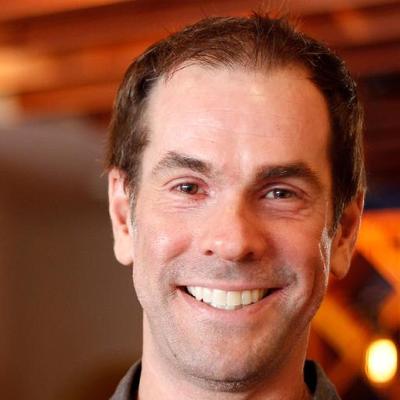 Rick is an industry-leading authority on simplifying Facebook ads and online marketing for entrepreneurs and small businesses. He’s the host of The Art of Paid Traffic podcast.