You may feel that you have already addressed the obvious SEO basics: relevant keywords, optimized titles and on-page copy, a functioning XML sitemap. Yet despite those efforts, you are still unable to move ahead of competitors in the search results for your most important queries.
You may also be constrained by time, budget, or organizational limitations. A full technical overhaul or a long-term SEO commitment may not be realistic right now. Instead, you are looking for a small number of changes that can deliver meaningful impact without requiring major restructuring.
That is a reasonable position.
The following improvements do not require advanced SEO expertise, large budgets, or extensive site changes. They are not shortcuts, but they do address areas where focused effort can produce disproportionate results.
1. Distribute Home Page Authority to Your Most Important Pages
Your home page typically attracts more external links than any other page on your site. A foundational SEO principle is ensuring that this authority flows intentionally to the pages that matter most.
While search engines are capable of rendering JavaScript-based navigation, plain HTML links remain the most reliable way to communicate importance. Links placed within the body of the home page carry more contextual weight than those buried in footers or utility navigation menus, which tend to pass less authority.
Highlighting key services, categories, or cornerstone content directly on the home page benefits both users and search engines by clarifying what the site prioritizes and where link equity should flow.
2. Eliminate Excessively Large Images
Image optimization remains one of the most common and easily corrected performance issues.
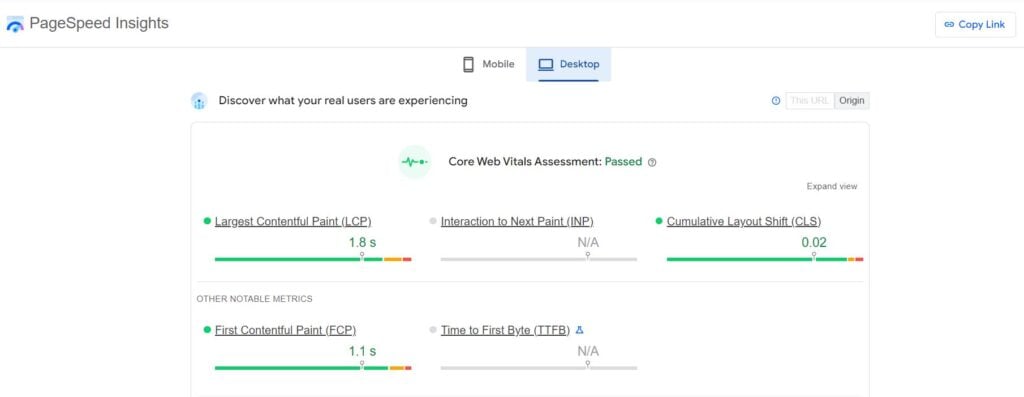
Large images that are resized visually but not properly compressed slow page load times and degrade user experience. A single unoptimized image can add several seconds to load time, which negatively affects both search performance and conversion rates. Images should be saved at appropriate dimensions and compressed before upload. This is not a design compromise; it is a technical requirement.
Use Google PageSpeed Insights to identify oversized assets on any page. It will flag specific images contributing to slow load times and offer concrete recommendations. For many sites, addressing image bloat is still one of the fastest ways to improve measurable performance.
3. Reclaim Link Equity Lost to 404 Pages
Externally linked pages that return a 404 error represent wasted authority.
When reputable sites link to URLs that no longer exist, both users and search engines reach a dead end. Identifying these URLs and redirecting them to relevant alternatives should be a priority.
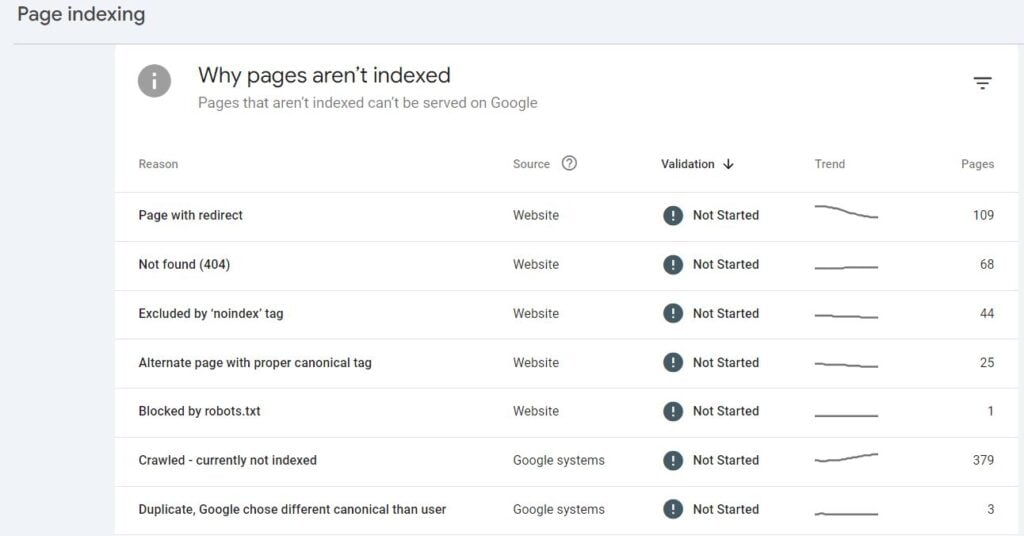
In Google Search Console, navigate to Indexing, then Pages. Under the “Why pages aren’t indexed” section, click the “Not found (404)” row to see the specific URLs returning errors. From there you can identify which ones have external links pointing to them. Any page with inbound external links returning a 404 should be permanently redirected to the most contextually relevant live page as quickly as possible. If you are not yet familiar with how redirects work and when to use each type, that is worth understanding before you start, as the wrong redirect type can cost you the equity you are trying to recover.
4. Ensure Off-Site Content Benefits Your Primary Domain
Content published on external platforms can generate attention without delivering lasting SEO value.
If articles, videos, or campaigns earn links but fail to reference your primary domain, the authority remains with the host platform. Brand awareness alone may be acceptable in some cases, but from an SEO perspective, this is often a missed opportunity. Whenever possible, high-value content should live on your own site. When content must be hosted elsewhere, ensure that it includes clear, relevant links back to your domain.
SEO benefits compound where ownership resides.
5. Use Community Conversations to Identify Topics Early
Keyword tools reflect existing demand. Communities often reveal emerging demand.
Forums, Reddit threads, Quora discussions, and industry-specific social spaces surface recurring questions long before they register as high-volume keywords. Monitoring these conversations allows you to identify topics early and publish content ahead of competitors. A supplement brand, for example, might discover that questions around sleep optimization consistently appear among their core audience, even though their product catalog does not explicitly target that topic. Creating genuinely useful content around it can attract that audience and strengthen topical authority in adjacent areas.
This positions your site as a resource rather than a follower. The SEO Keyword Treasure Map course covers this kind of outside-the-box keyword thinking in detail, including how to find terms that your competitors are not yet chasing.
6. Improve SERP Visibility with Structured Data
Structured data does not directly improve rankings, but it can significantly influence how your listings appear in search results.
Enhanced listings that display additional context such as reviews, pricing, availability, or article authorship tend to attract more clicks. Think of it as making your listing stand out in a sea of identical blue links. A product page with star ratings, price, and stock status visible at a glance is simply more compelling than a plain title and description. Structured data makes that possible without changing your rankings.
Markup should be accurate, restrained, and compliant with Google’s guidelines. When used correctly, it improves clarity rather than attempting to manipulate results, and it increasingly supports visibility in AI-generated search responses as well.
7. Study Competitors’ Link Profiles to Find Practical Opportunities
Authoritative inbound links remain important, but acquiring them often feels opaque.
One practical approach is to identify sites that already link to multiple competitors. These sites have demonstrated a willingness to reference businesses in your space and may represent realistic outreach opportunities. Tools like Semrush’s Link Building Tool and Ahrefs’ Link Intersect feature make this straightforward: enter several competitor domains and surface the sites linking to more than one of them. Those are your highest-probability targets. They have already qualified themselves by linking to similar businesses.
Not every site will be appropriate, but this method helps focus effort on prospects that are already contextually aligned with your industry. Quality and relevance matter far more than volume.
8. Strengthen Internal Linking Between Related Content
Internal linking is frequently underutilized.
Pages that are topically related should reference one another in meaningful ways. A post on running shoe selection, for example, should link to related content on training schedules, injury prevention, or gear comparisons. This helps users navigate deeper into the site and helps search engines understand content relationships.
Internal links also distribute authority beyond the home page, reinforcing topical clusters and clarifying which pages serve as central resources. Small improvements here can meaningfully influence crawl efficiency and relevance signals without requiring any external effort.
9. Align Content With Search Intent, Not Just Keywords
Ranking for a keyword is not the same as satisfying the intent behind it.
Before expanding or optimizing content, examine what currently ranks and why. A search for “running shoes for flat feet” may return comparison guides rather than product pages, which tells you the user wants information first, not a direct purchase prompt. Content that mismatches intent often struggles regardless of how well it is otherwise optimized.
Improving alignment may involve restructuring pages, adding clarity, or removing unnecessary elements rather than simply adding more text. Meeting intent consistently is one of the strongest signals you can send to search systems that increasingly reward usefulness over optimization.
10. Fix Obvious Technical Friction Points First
SEO progress is often quietly limited by small but impactful technical issues.
Common examples include blocked resources, broken internal links, duplicate URLs, improper redirect chains, or inconsistent canonicalization. A site that has multiple versions of the same URL indexed, for instance, is effectively splitting its authority across duplicates rather than consolidating it. These issues do not require advanced expertise to identify, but left unaddressed they can undermine performance across many pages simultaneously.
Addressing technical friction improves crawl efficiency and prevents search engines from wasting effort on avoidable problems. Before pursuing advanced tactics, ensure the basics are solid.