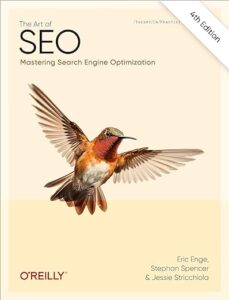
Brian: Thank you for being here. Let me just tell people a little bit about Stephan. You already met him a bit when we found out he didn’t do an audio version of his 770-page book, which is a relief to me. So, Stephan is, he says he’s an SEO expert. I consider him the SEO expert, and I’ve thought of him that way from the first time I met him. He’s the founder of Interactive Agency Netconcepts. He’s a best-selling author, a serial entrepreneur, a life hacker, a spiritual coach, and a podcaster. He has three books published by O’Reilly: The Art of SEO, a 770-page bible. It’s in its fourth edition because Stephan never stops learning, and he never stops adding on because he has to because stuff is changing so rapidly, especially with AI. But even before that, the fourth edition, he had a second and third before the fourth, I think. The fourth comes after the second and third.
He’s also written Social eCommerce and Google Power Search. Those are two other books. He self-optimized websites of some of the biggest brands in the world, including Chanel, Volvo, Sony, and Zappos. He hosts two podcast shows, Get Yourself Optimized & Marketing Speak. He’s contributed to Harvard Business Review, AdWeek, Huffington Post, and Search Engine Land, to name a few. Still, now that he’s contributing to Titans Xcelerator, I think his career is complete.
So, thank you, Stephan, for being here. When I saw you at Genius Network, and you said yes before I even got the sentence out, whether you would appear, it really warmed my heart. And we’ve been friends for quite a few years, and I’ve always had tremendous respect for you, and I really, at the last Genius Network meeting, I still remember how you called me out during lunch, and it meant so much, because I was playing small during that lunch. So he actually is someone who’ll tell you when you have spinach in your teeth, and that makes them a real friend, so thank you, Stephan, for being here. I really appreciate you.
Stephan: I appreciate you, too, Brian. And grateful to be here, grateful to share this knowledge, and grateful for the practical techniques and tools we’ll go over. I would invite everyone to think of this as an opportunity to help someone you care about also get higher visibility, higher Google rankings and greater reach and impact in LLMs like ChatGPT, Grok Perplexity and Claude of the world. If you put someone in mind that you’re going to learn this to teach them later, your retention rate will go from, on average, in the 30s percent to 90 percent or more. Hence, if it’s a colleague, a loved one, a friend, a family member or your spouse you want to teach this to, keep them in mind and make that your intention.
So I’m going to share my screen. I’m going to actually walk you through some tools and things. We’re going to make this interactive, but I need to give you some background on where things stand with SEO and AEO. The death of SEO has been greatly exaggerated. Long live SEO. SEO really is SEO. Search engine optimization is the foundation for good AEO, also known as GEO. So, answer engine optimization or generative engine optimization. You cannot have good AEO if your SEO is a train wreck. So, for people to say that SEO is no longer a thing does you a great disservice if you believe them.
Let’s go to my screen here. Okay, so those are my three books, clients and podcasts. Oh, and you get a free digital copy of the book if you want. I’ll even give you the audiobook, too. So just email me at Stephanspencer.com if you want that. Okay, so here’s the truth about ChatGPT, and just LLMs in general.
Even though ChatGPT is catching up in search volume, it’s still only 12% of Google’s. That’s pretty impressive, but Google sends 190 times as many. More traffic to websites, so if you’re reliant on, you know, ChatGPT and Claude, and so forth, for your marketing, you’re not going to get much traffic to your website. Google is really the game in town, and when you think about how this works, in terms of if I have a prompt I’m typing in as a user into ChatGPT.
Let’s say I’m going to probably be asking for late-breaking information. It’s only the small subset of queries where things don’t change, like the height of the Eiffel Tower, that don’t change. Okay, so ChatGPT can access pre-training data, and it doesn’t have to use its relationships with Google, Bing or whoever to get late-breaking information from the web.

So, there’s this thing called a query fan out that happens. Most people don’t realize this, but when you type in your prompt into Gemini, ChatGPT, or whatever, there will be a subset of queries that will be sent out to the web, probably to Google. Bing still has some relationships, but its search results are nowhere near as good, so most LLMs will do deals with Google. Maybe they’ll start with Bing, they’ll be unhappy with the results, and then they’ll switch to Google.
So if you type in, let’s, let’s come up with an example. Okay, I’m going to show you a little bit of behind-the-scenes here. This is ChatGPT on the left, and this is the developer tools, Chrome Developer Tools, on the right. So I have asked for or been prompted for the best running shoes for long distances. Okay, now what’s happening behind the scenes is if I, okay, so I’m going to actually show you how to do this, but you don’t have to do this, you can just use a Chrome extension to do this for you, that’s much better. So you take this part of the URL here, this ChatGPT URL, copy it, okay, you go into the developer tools, so if you don’t have developer tools turned on, then turn it on in your browser in Chrome, and so the shortcut for this is Command Shift I, and so I’ve typed, so I brought up this panel over here on the side, I went to the network tab, I did a search in the filter here for this. Actually, let’s start over so you can see it happen.
So, command command command option I, not command shift I, okay. So now I’m going to refresh. I got to grab this URL, the part that is after the C slash. I’m going to refresh this ChatGPT window, and a lot of stuff’s happening in this network, but I don’t want all that. I just want one thing. So I’m going to use the little magnifying glass now. I’m going to put in that URL. So basically, it’s going to show up here, that part of the URL. Then you’re going to do a find for queries. You’ll see that it includes search keywords. Those keywords are things like runners world and stuff like I didn’t prompt for runners world, I didn’t prompt for any of this, so it’s actually doing some intelligence around like what is the intention of the person prompting the user, and it’s going to come up with, let’s say, three five, maybe more search queries that is going to hit the web with. So, here’s a one-second cheat sheet on this, and a one-minute video on how to do it right here.
Brian: This is what ChatGPT researches.
Stephan: So, I’ll just paste this into the chat. I’m going to give you a lot of different tools. I’m not going to paste them all into the chat. I’ll follow up with a list of links after this presentation, and then you’ll be able to go out and explore all these at your own leisure. Still, you know, as I said, the foundation of AEO is SEO, and multiple studies show this.
So, here you can see that in this study done by OP alerts, the strongest correlation for whether you perform well in the LLMs is the fact that you appear in search engines that you rank well in search engines that they link to you, that you have links to your website, that you have a high authority score from those links, those backlinks, all those highly correlate strong correlation to you doing well in the LLMs, and here’s another citation study that shows you know this, this is all important.
You need to rank in the fan-out queries, the sub-queries that happen from your prompt, and these change every time, so you can’t just be resting on your laurels. You need to constantly pay attention to what your ideal target, your ideal client avatar, is prompting for and then see what the subqueries are in the query fan-out. Like I said, there’s a great Chrome extension, multiple ones that do this for you, so you don’t have to do what I did, and you know, actually didn’t do it well.
I was live on this call, so let me give you that Chrome extension, and it’s right here. Okay, I’m going to paste it into the chat. I’m going to pull it up on the screen. So this is one of many. This one’s called quality.ai. It’s free, and, of course, you have to use Chrome to make this work, but yeah, just pull up your ChatGPT window. This little short will explain what’s happening behind the scenes, but you don’t have to actually do that. You just use the extension, and it’s super simple.
Brian: Stephan, just a quick question, so you’re using, you seem to be defaulting a lot to Chrome. Is that because it’s the best? It’s because it has the most choices, or you could use other browsers.
Stephan: Well, if you’re going to use certain Chrome extensions to help with SEO and AEO, and you know, other kinds of AI capabilities, you know, like prompting libraries and things like that. Then you’d probably use Chrome, since its extensions are specific to Chrome and won’t work in Safari.
Brian: Yeah, and the thing is, Chrome, what you said at the beginning about Google still dominating kind of makes it obvious that Chrome is probably the best place to be.
Stephan: Yeah, although I do use Safari quite a lot. I’m a big Mac fanatic, and I like Safari, so I go back and forth between Chrome and Safari, but if I need to use the tools I’m in, like the Chrome extensions, I’m obviously in Chrome for that.
Brian: Okay. Good, thanks for that clarification.
Stephan: Yeah, so this is just further evidence that you know a lot of citations are happening in these LLMs, like ChatGPT, and so forth, and in this one, this was a study specific to ChatGPT. They found that the most cited websites were Wikipedia, Reddit, Medium, Forbes, and LinkedIn.

So, if you want to get more visibility in ChatGPT, get content published on those platforms, and/or get mentions of your brand in articles or content pieces on those platforms. Right, so if you have a blog, why not set up a Medium account if you don’t already have one, and create what might be called an evil twin of Andy Crestodina. A colleague in the SEO industry, it’s a great term. So, the evil twin is, let’s say, that the article is the best practices of the greatest copywriters of all time.
Okay, so the 10 best practices of the greatest copywriters of all time. The evil twin might be the 10 biggest mistakes that newbie copywriters make. It’s the same research, the same structure, same content, same points, but rewritten and repositioned, so you don’t have to start from scratch, and you publish the evil twin on a site like Medium, or if you have a column or contributorship with an online magazine or something that you regularly publish to, you don’t have to write something from scratch, because a lot of these places want unique content. Still, you want to avoid Google’s duplicate content filter, and creating an evil twin version is a good way to do so.
But yeah, Wikipedia, of course, is very hard to get into, so Grokipedia is much easier. So, if you wanted to get into Grokipedia, check this out, there’s this guy, he’s pretty famous, his name’s Brian, and he has a Grokipedia page, as of what was that a couple of Genius Network meetings ago.
Brian: So you came up to me with it, and I said I didn’t know I had this.
Stephan: Yeah, because I was during a break, and I’m just like, I see Brian over on the other side of the room, I’m like, I’m going to make a Grokipedia page for him, and the great thing about this is you don’t have to put much effort into it, because Grok does the heavy lifting.
Grokipedia is a Wikipedia competitor built by Elon Musk and x.ai to compete with the, I don’t know, the boys club of Wikipedia, where it’s very hard to get into. You have to know somebody, and you have to play all sorts of games and stuff.
Brian: We did some. We had somebody speak at Xcelerator about how to get a Wikipedia page. It’s a lot of gyrations.
Stephan: Yeah, and it’s very easy to violate their conflict-of-interest guidelines. You don’t have that issue with Grokipedia, because, like, Brian could have signed up on Grokipedia, or just used his X account, his Twitter account, logged in, and then suggested a page. It’s him as long as he’s notable enough, with enough media mentions, podcast interviews and things like that, as suggested in the new article. It doesn’t matter to Grok that he’s requesting an article about himself; yeah, that’s a conflict of interest on Wikipedia. Still, Grok decides whether you get the page, so there’s no conflict of interest.
It’s all in the hands of Grok, so that’s pretty cool. So, this is something that you could do; you have a lower barrier to entry. It’s easier to get into Grokipedia than Wikipedia, and once you’re there, you can start link building to help it show up in Google, right? Because this new Grokipedia article won’t automatically get indexed by Google.
So, what I did was I went to my interview with Brian on Marketingspeak.com. I added a link on that episode page to this Grokipedia entry, which helped Google discover the page. And then, if I were to build more links to this page, it could potentially even rank for Brian’s name.
Brian: Maybe I should be building some links to it
Stephan: Exactly, so if you link to it in the footer of your website, just as a basic, two-minute thing for you to do, that will tell the Google algorithm that this is an important article, because you’re linking to it. You’re not just linking to it and passing; it’s part of your footer, or it’s linked from your homepage, which will really help it.
Brian: Chris, you’re listening to this. Chris is listening to this, because he does everything on my website.
Stephan: Yeah, okay, cool.
Brian: Thank you, Steph. And when you sent it to me, I thought it was actually more accurate. It was pretty accurate, actually.
Stephan: Yeah, yeah, these Grokipedia articles are more unbiased and more friendly than Wikipedia. Like, it seems like Wikipedians are looking for dirt, so if they can find.
Brian: Yeah, controversy is always the lead.
Stephan: Yeah, they want to dig that up and. Like, oh, Brian was in a small-claims lawsuit with his tenants in 1968 or something. Why would you do that? But I don’t know, that stuff happens a lot on Wikipedia. So let me share a couple of other tools. While we’re looking at tools, this one is free, or almost free.
It’s called AlsoAsked. When you’re using Google, which, remember, is the most popular website on the planet, ChatGPT is not. So, if you’re using Google, and you’re searching for or prompting, because you can get pretty darn good AI overview answers from Google these days. If you just type in Brian Kurtz, if we see this box here of “people also ask,” we can actually click the down arrow, expand it, and get more and more people also asking questions, so it’s kind of an infinite rabbit hole.
Now, these aren’t very good, but if I were to type in, like, what is quantum mechanics? I get an AI overview, and people also ask. And as I’m drilling down here, I’m getting seemingly infinite questions. This is pretty handy, but it’s kind of laborious to click and expand, keep drilling down. So this free tool, or freemium tool, called AlsoAsked, will do this for you.
So I’m going to put in quantum mechanics here, just for fun. I studied that, among other things, and my master’s program, a pretty useless expense of a lot of money to go to university for postgraduate, but anyways, this is, let’s see here.
So, what normally happens is it shows a tree graph of a bunch of those questions, and then you can drill down and recenter that tree. You can download the CSV file of all these questions, like there’ll be hundreds of them, and then you can use that as fodder for things like frequently asked questions pages, ideas for videos for your YouTube channel, ideas for blog posts, for your editorial calendar, for your social media, what to publish on X and LinkedIn, and all that.
It’s really quite handy, but even just paying attention to what shows up in that people also ask box and also down at the bottom a lot of times you’ll see another box of people who search for this also search for these sorts of things so that is one little quick tool there’s another one that I want to show you, called What AI Knows About You, or Waikay, I don’t know how to pronounce that. Still, it stands for What AI Knows About You, and there’s a free starting point; you can get a free plan here, it’s at waikay.io/free. I interviewed the founder of this tool, Dixon Jones, on Marketing Speak.
So, I asked him if I could give away the free plan, the free tier, to you guys, and he said, of course. So you can check out his interview here on the website; it was probably about six months ago. Anyways, so you’ll be able to check that out and get a better sense of what. The tool does, but yeah, it’s pretty cool. So you can monitor what AI and multiple LLMs think about your brand, whether you’re being cited or not.
By the way, there are four ways that you can appear or not in AI and the LLMs in large language models. One is you get a citation that’s a link somebody could actually click on that and end up on your website. Another is a mention with no link, so it’s a linkless mention. The third way is that you are paraphrased, or your content is paraphrased, but you’re not cited as the source or even mentioned. That’s annoying. Maybe if you’re talking about something really useful and interesting, you know, breath work or whatever, and they’re using your technique, and they’re talking about it, but they’re not giving you any credit for it. That’s kind of annoying. That happens a lot.
And then the fourth iteration, or way that you can appear, is to not appear at all, so you’re invisible, that you don’t get cited, you don’t get mentioned, you don’t get paraphrased. So those are the four ways you might appear in an AI. Let me just turn off the screen and talk to you guys face-to-face for a bit, just to tune in to what is hot and important for you at the moment. Are you guys trying to get more traffic from Google? Are you trying to get mentioned by AI? Is it a particular AI like ChatGPT or Claude? Are you trying to utilize AI better as a user, like you know, up your prompting game? Where is the pain point?
Brian: Great, this is great, Stephan. So we’ll get some feedback, and then you can just answer anything that comes up. Jonathan?
Stephan: I’m fascinated. This seems like such a rabbit hole. My kind of general question for you is, because you’ve done so much more of this, and you understand what people need. What are the top two or three things that we should do that are a no-brainer to you? Like, if you were going to take what is step one, what is step two, what is step three?
Brian: Yeah, so you got nothing going on in SEO. That’s a great one of the top two or three things. That’s a great question.
Stephan: Yeah, so I’d say one is to build more authority to establish and present authority to both Google and the LLMs, and that could take many forms. One would be a press page. Do you have a press page currently, or a media page on your website?
Participant: No.
Stephan: Yeah, so you could go to StephanSpencer.com to see an example of that. That is where I’ve listed and provided video embeds, YouTube embeds of all my TV appearances, mentions in mainstream media, magazines, and newspapers, and so forth. Those are listed there. Podcast appearances: all the episodes. The way I’ve done it is you can listen or watch the episode right from that page, without jumping to the podcaster’s website, because I don’t want to lose people once they’re on my site.
Another common mistake that happens is that people prominently feature their social chicklets, the social icons, like in the top part of their nav, and that’s sending people the wrong direction. They should be going from your Instagram, X account and YouTube to your website, not the other way around. If they’re going to your Instagram or YouTube, they’re not coming back. They’re watching cat videos, they’re binging on, like, I don’t know, all sorts of crazy nonsense, and they completely forgot how they ended up there in that rabbit hole of distraction. Don’t send them there.Put it in your footer, bury it, but you know, still have it available to them. Just don’t feature it, because that doesn’t do you or your visitor any favors, but you know that the press page is a real credibility builder.
It’s great for the LLMs, it’s great for, let’s say, a TV producer, a journalist, a podcaster who’s coming to check you out to see that you have a press page with all that kind of celebrity-status sort of stuff, really helps you, too. If you do speaking engagements, you could create a speaking page that also serves as a major credibility builder.
So, I have a speaking page on my website under the work with me section, because I just added too many things to the top nav. Ideally, you have it featured if you want to get a lot of speaking gigs, keynotes, and so forth. Have it featured as a primary top nav item, and not in a drop down, but that speaking page has like sizzle reels and speaker reels of like examples of me speaking, has testimonials from conference organizers, from attendees, it has awards and all that sort of stuff, lots, lots more credibility here, and the reason why authority building is so important for AI and for Google for SEO is because if you’re a nobody, then why should they cite you? Why should they drive traffic to your website?
They probably shouldn’t, right? So, if you’re an established authority, there’s this acronym Google has called EEAT: expertise, experience, authoritativeness, and trustworthiness. So here is where the AI slop gets caught up, is that that e of experience, because an AI has never weaved a basket or gone scuba diving or represented itself in court, or like any number of different things that require actual human experience, so you could get an AI to write articles about those things, but that’s not credible, and AI is, you know, going to get that AI slop is going to get sniffed out by the algorithms, whether it’s Google’s algorithms or Chat GPTs or whatever, and it’s not going to show up, it’s not going to get used, it’s, it’s, it’s not valid.
Maybe there’s some good stuff in that AI article about basket weaving, but it’s very likely to have elution hallucinations too. So we need to really establish our authority position or celebrity status as well, if possible, and that’ll make a big difference. Links that point to your website will also help a lot with that. Nobody links to you, it’s hard for you to look credible to AI or to Google, and as far as, like, you know, another big kind of area to focus on, it would be content that is not easily replicated by AI.
If you have a unique angle or position on things, you know, maybe it’s a contrarian position, maybe you have a unique experience that is hard to replicate, maybe you have, you know, your own framework or methodology or system that you should be writing about, right? So, I have a lot of content around spirituality that is not going to be easily replicated by AI, because I’ve had the experiences and I can write about them, I can shoot video about them, and when I’m using my camera or my, my smartphone to take video of me, and then I can use a tool like rask.ai to create a version of that video in a foreign language, right, so I can have it dub my voice, it sounds like me, but it’s now speaking French or German. That’s pretty cool, right?
You could have an AI avatar view that looks like you, has your mannerisms, has your voice, your hand gestures, all of it. So, a tool like HeyGen will do this as well. It’s pretty cool. It’s pretty mind-blowing. What can you do these days? Let me show you a fun example. Sharing my screen here again. So this example is from my podcast website, GetYourselfoptimized.com, and what we did is we took the content of the episode, and we used it as fodder for an entire video-based three-module online course and had the AI’s that we used, like we used ElevenLabs, we used Claude, we used a bunch of different tools, but check this out.
What we created with this is a full-blown free video-based online course at the end of the show notes page, where you can see, like, what each of these modules is about. About 20 minutes long, it includes an AI-generated stock video and a workbook. I’m not an expert on homeschooling, I mean, we are homeschooling our six-year-old, but I’m not an expert on it, but this guest was and is; she has a book on it, so you could learn a lot from her, and it’s her voice, but it’s AI.
Of course With her permission, we got her to review it and approve it, and everything, so you can watch these videos and hear her voice, but it’s not actually her, sounds like her, and you can go through the workbooks, you can take the quizzes after each module, and all of this was built based on the podcast episode, and then the AI, in this case Claude, based on the prompting, filled any of the gaps with content from the web and from whatever they could find it from Mary, besides the podcast transcript. Amazing, what you can do.
And then this is, you know, further bolstering your content, and you become the only one who’s doing something like this. I mean, I don’t know of any other podcasters that are creating courses like this, and you know that’s just scratching the surface of what is possible.
Participant: How often do you offer off a podcast? Do you create that sort of thing? You obviously don’t deal with everyone.
Stephan: No, we don’t, and we’ve only done a handful of them so far. So, here’s another one, and it’s still a lot of work, but it’ll become so kind of push-button easy in the coming months. The hardest part was making the video interesting enough for people to want to watch. I mean, they can certainly listen to the training audio and get a lot out of it without getting distracted, so it could be like an audiobook, but making the videos really interesting is harder. Still, it’s coming along, it’s coming along a lot.

Check this out, this is, this is so cool, so one of my clients is This is so whatismyIPaddress.com We took this guy, or this company, it’s a one-person company. He started it as a hobby. We took him in 2017, when he signed up with us, from 2 million visits a month, which is a lot. Most websites never get anywhere near that, but he starts. That’s a starting point. We are now at about 14 million visits a month.
And he’s in the top 3,000 websites. Yeah, pretty awesome. So, I’ve got a case study about this. If you’re curious, how we pulled that off, it’s on Stephanspencer.com and the results page, but the point of this is one of the things that we did from an AI perspective for him that was really pretty special. Oh, actually, it’s 15 million, not 14, so a lot of great stuff in this case study, and you can see some screenshots of some of the deliverables and some of the planning that we do behind the scenes; there’s some good behind-the-scenes stuff there.
So he has a book, called Privacy Crisis, that was my idea. We got him a ghostwriter, and actually, I was going to be a co-author. I was actually the original. I was the author, and then I invited him to be a co-author, and then I decided this should just be his book, so this is now out. He made the book completely free. I mean, you can buy it in paperback and on Amazon, but you can get it as an audiobook and everything digital completely free. But the AI angle here that I think is really fun is this AI-generated book trailer we made for him, which I’m super proud of.
Brian: All AI-generated? and it’s him, or it’s not him, and it’s
Stephan: It’s a George-Clooney-esque version of him, so it’s obviously AI, and it talks about it being an AI in there, so we’re not trying to fool people.
Brian: Yeah, no, that’s good, being transparent about the AI, right?
Stephan: But it’s also tongue-in-cheek and really quite funny and entertaining. I’ll play just a little snippet of it.
Stephan: Okay, so that’s kind of fun, right? That’s not him, like this. Where’s the picture of him? It kind of looks a little bit like him, but it’s just so over the top, and he’s drinking a cup of coffee on Mount Everest, like, obviously it’s ridiculous, but it’s fun, right? And taking it in a kind of a tongue-in-cheek, outrageous sort of angle, I think, is the right way to do it, so you’re not trying to fool them, and they wonder, is this AI, or is this human?
Some really great, successful channels are purely AI. One of my favorites is Julia McCoy, and she’s just crushing it in terms of her channel. She has, let’s see, how many hundreds of 1000s of subscribers, let’s see, 291,000 subscribers, and her most popular video has almost a million views, 861,000 views. She’s up front, or her AI avatar is up front at the beginning of the video, saying, Hey, I’m Julia McCoy’s digital avatar, digital twin, or whatever.
So that’s an AI that’s done with, HeyGen. Pretty cool. Like, what’s possible now is mind-blowing. What will be possible in six months will be 100x mind-blowing, because this is on an exponential curve. You know, the way I like to frame it is what I learned from Ray Kurzweil, the futurist, yeah, who wrote Age of Spiritual Machines, and some singularity is near, etc., etc.
So he explains it like this. So at today’s rate of change, which is much faster than 100 years ago, if you were to take today’s rate of change and compare that with 100 years and say 100 years of technological evolution, so 100 years ago the toaster was being invented. If you were to look at today’s rate versus the last 100 years, you’d find that 100 years of technological evolution would fit into 20 years. Still, because we are now on an exponential growth curve, it would only fit within the next 12 years, because it’s not going to stay stagnant.
So, just wrap your head around that. 100 years ago, they were just inventing the toaster. What’s going to be in 12 years will be like a Star Trek episode. It will blow your mind, and people aren’t really grokking that this is a massive sea change we are running into. It’s so fast, like three years from now, most white-collar jobs will probably be gone, you’ll have to kind of reinvent yourself and your company in the next three years or so, maybe it’s four, maybe it’s five, but maybe it’s only two, right?
This is a crazy, chaotic, exciting time to be alive, and if you’re not like spending at least 30 minutes a day playing with AI, trying new things, you know, installing Claude skills that you get off GitHub, and using Claude code. You know, playing with, like, Grokipedia, or whatever else, like, you should be doing this stuff, because you’re going to get left behind. It’s going to be impossible to catch up because of the law of accelerating change.
Brian: Yeah, so Jonathan, do you think Stephan answered your question?
Participant: Yeah, that was that. I mean,
Brian: Like 100 fold. Yeah, like 100 fold.
Participant: He over-delivered. He’s obviously a good.
Brian: Yeah, yeah. Let me go on to someone else, though, because we only have what’s your time, Stephan? We normally,
Stephan: I can stay.
Brian: Let’s get, take these questions. This is a great way to pick Stephan’s brain, because it’s a big, it’s a big, it’s a BFB, a big F and brain
Participant: This has been great, thanks so much, Stephan. Here’s a question: every time you ask an AI a question, it gives a different answer, right? Yeah, so you’re. Pro, you’re really dealing with the probability that the AI’ll bring you up. Not a certainty. It’s not like Google and ranking on page.
Stephan: Exactly.
Participant: How do you, what can a person do to control or mitigate that? I mean, obviously, there’s the stuff you’ve talked about with just being an authority, but is there anything technical, or
Stephan: Yeah, so knowing what the, the kind of probability distribution of the sub queries in the query fan out, because not only will the output change from the exact same prompt five minutes later from the exact same account on ChatGPT or Gemini or whatever, and the same custom instructions, the same memory, etc., right?
So you can see how often the same subqueries are showing up, and maybe it’s a likelihood of 30 subqueries. You can see how you’re ranking in Google for all 30 of those. Even if only three or five of them are showing up for a particular person’s query or prompt, that’s one way, on just a very granular level. Still, more broadly, I love the quote: “What gets measured gets managed,” misattributed to Peter Drucker. He never said that, but if you want to use a tool that tracks whether you appear in LLMs, I like Ahrefs.
Other tools do this, but Ahrefs has this brand radar. They track, let’s see, I think it’s about 300 million prompts over the course of a month, and then they look for your brand being mentioned in those and a link to your website, so by far the biggest set of prompts they’re tracking and checking the output of is AI, Google AI overviews, but they’ve got over 10 million ChatGPT, 10 million Perplexity, 10 million Grok, 10 million of Microsoft Copilot, and what they’re doing is they’re they’re synthetically coming up with those prompts, those aren’t real users typing in those prompts. Still, at least this is kind of indicative of whether you’re moving in a positive direction, or you’re staying stagnant, or you’re completely invisible on 10s of millions of prompts, you’re just completely invisible, and you can just be tracking that on an ongoing basis, you know. Just give you the numbers. In fact, here’s what it looks like, real quick. If you have an AHref subscription, just look for it. I’ll open a new window, so if anyone wants to give their URL, I’ll tell you how many AI citations you got.

Brian: BrianKurtz.net
Stephan: Briankurtz.net is not so good, Brian.
Brian: No, awful. I knew it’d be awful.
Stephan: Yeah, well, you had one with Chat GPT a month ago, but you lost it. It’s like, no. No soup for you.
Brian: I’m gonna, I’m gonna change that.
Participant: So, this is real or simulated, like, so
Stephan: These are synthetic prompts, because there are 10s of millions of them. With just ChatGPT, there’s only, there’s over 10 million, so you can actually see more about what they’re doing here. If you go to their brand radar page, it’ll show you how many prompts they’re doing, but these are
Participant: Let’s try Coca-Cola, real quick.
Stephan: Sure, over 400 million. Yeah, I was 100 million off, but see here: ChatGPT, 14 and a half million prompts, okay. So you want me to pull in Coca-Cola.
Participant: We know it’ll be big.
Stephan: There’s a dash in there, right? Yeah, that’s a lot. 5500 mentions or citations in ChatGPT of 3500 pages
Participant: in the list.
Stephan: So, remember, this is indicative, because these are real people. And the real output given to those real people, these are synthetic prompts that are being scarfed up by Ahrefs bots, but it’s better than nothing.
Brian: Yeah, let’s get thanks to Mario and Max, that was great, Stephan. Great question,
Participant: Hey Stephan, good to see you again.
Stephan: Yeah, good to see you.
Participant: My original, you gave so much good stuff here, like when we were talking at lunch at Genius back in February. I’m, you got my wheels spinning with all this. The original question was about our authors. You originally asked about Grokipedia, and all that. So, are you? I want to have one for myself with my books and other things, obviously. But I’m always thinking of ways to help our authors. So, are you saying that Grokipedia is a much easier win than the Wikipedia page, once the book’s live?
Stephan: Yeah, so it’s a lot easier to get a page created in Grokipedia, and you won’t have any conflict of interest. People come in with pitchforks from Wikipedia coming after you, because that will happen. After all, a vendor or service provider is not supposed to help their clients get into Wikipedia, but you can totally do that for Grokipedia, right? You could just do it for them as a free bonus, right?
So the notability hurdle is still there, but it’s not as high, so if you just spend five minutes looking up like podcast episodes where your client was the guest, you find some media mentions, put that client’s name in quotes on Google News, because otherwise you get a lot of noise, no quotes, you get like Brian and part of the article over here, and then Kurt somewhere else in the other part of the article. It’s not a Brian Kurtz mention, so put it in quotes in Google News and find news articles, magazine articles, etc.
Also, do the same thing on Google web search to find at least, let’s say, a dozen or so mentions, and I’ll just show you what it looks like. This is not rocket science. You’re just here. Let me share my screen again. I’m on Grokipedia, in my account, and I’m going to go to your activity. Let’s go ahead and create articles here so we have all these articles. Let’s see what I did, for example, Joel. Well,
Brian: You did one for Joel.
Stephan: Yeah, so I put it in here. You don’t have to put this stuff in here, but I want to make sure that it’s mentioned that he’s the creator of the Ultimate speaker system, and I just did this as a surprise, just like I did it for Brian. He didn’t ask me or anything; he didn’t even know about it. It originally rejected my request for the article because I said he was a co-founder of the National Speakers Association, which was not technically correct. The AI figured that out and kicked back the article, rejecting it.
Brian: Wow, that’s impressive.
Stephan: Yeah, so I found out that he is actually a founding member of the National Speakers Association. By correcting that and resubmitting with all these, you know, handful of mostly podcast interviews, it was approved, and the article is pretty darn good. I mean, it just relies heavily on, you know, first-person stuff, so his about page, and so forth. So it’s not, it’s got great storytelling, and it’s, it’s really great positioning. It’s not trying to, like, be so neutral that there’s no soul to the article. This sounds like somebody you’d want to work with. In other words, I really like it.
Participant: Yeah, so if we have our own podcast, it’s going to be even easier, especially if we have hundreds of episodes, or we’ve done guesting on other ones.
Stephan: Yeah, it’ll be easier for your clients to get into Grokipedia if they have at least a handful of podcast appearances, and you’re one of them. So, like Brian’s entry, I, or the request, I made sure to put the marketing speak episode page in there, because you know, maybe you would find it on its own, but probably not, you know, I ensure that it’s going to be used if I put it in there, or it’s super likely.
Brian: It sounds a lot, it sounds. A lot on its own, as I recall.
Stephan: Yeah, yeah, it’s really good.
Brian: I’ve done well over 200, and it picked up a lot of them.
Stephan: Yeah, but I gave it a handful of them, the more important ones that I found. So I spent a few minutes rather than just saying ‘create an article for Brian Kurtz,’ because otherwise it probably won’t work. After all, you don’t even have a press page on your site, so you made it a little harder for me.
Brian: Yeah, I make stuff hard for everybody.
Participant: Do you do these LPs for the books and stuff too, and YouTube optimization, or are you strictly site-side SEO?
Stephan: We do YouTube optimization, like thumbnails and titles, and A/B test them and stuff. Yeah,
Participant: That LP was impressive, not one of the nicest looking ones I’ve seen in a while for a book.
Stephan: Oh, thank you. Yeah, we partnered with a design firm that we partner with a lot, called Studio1design.com.
Participant: I thought, I thought it would just be Claude. Claude’s doing some good design these days.
Stephan: Oh my goodness, no, dude. And well, Lovable is probably one of the better ones, but I would not rely on AI. It’s not like, no, I still send my own projects, my personal projects to Studio1 Design, because they understand conversion and they understand it deeply, and the AI, these, these cooker-cutter, cookie-cutter,
Brian: They’re not thinking.
Stephan: It’s hard to take them seriously because you can just tell.
Participant: Thanks, Stephan.
Brian: Thank you, Mario. Thank you, Max.
Participant: Hi, Stephan. My background is in accounting, including corporate retirement plan audits, but now I’m moving into the financial advice industry. I’m going to position myself as an alternative to financial advisors, focusing on coaching and consulting rather than managing client money. My question for you is: I’m glad to know the SEO stuff isn’t dead, because I spent so much time learning it, so it’s good to see it should still help with the AI AEO. Still, with your money, your life content, like right now, I know a ton of people are going to AI for financial advice with questions that they used to be scared to ask, or maybe you know they’re intimidated to go to an advisor for.
It seems like AI is pretty willing just to give answers to a lot of stuff right now. Still, I could see there eventually being a compliance nightmare with that. I’m wondering if I wanted to figure out, like what question, maybe someone specifically searching, like I want to find a financial advisor in my area, so of course I would want to maybe like find a way to get shown there, but what about questions where they might be asking an investment question. Do you think eventually ChatGPT might say, like, ‘Oh, sorry, we can’t answer that, we need to like put a list of advisors here.

Stephan: No, no, I don’t think that’s going to happen. Still, I do think we’re heading into an era of more zero-click search, where you’ll get the answer as an AI overview or just the direct answer, whether it’s from Google or ChatGPT, without really driving any traffic anywhere. People will not be clicking to go to a website for further information, so if you can come up with content that is maybe contrarian or not the typical that you would hear from a financial advisor, right?
So you say financial advisors are typically incentivized to drive you to a particular solution because they get a kickback or commission, and if you were to kind of highlight the downsides of working with the financial planner, because of that kind of situation that happens, and maybe they disclose it, maybe they don’t, and so forth, like these are the gotchas, and so forth, and if you can find ways to make claims that you, that require substantiation, and you substantiate them, you increase the likelihood that AI is going to cite you, right,
So, in a study where 1000 financial planners were surveyed, and well, AI is going to need to cite that study. They’re not going to just say 1000 financial planners all said that, you know, they don’t disclose when they get paid behind the, you know, behind the scenes, no, you need that, and if it’s on your website, that’s amazing. So, look for ways that you can create content that is maybe controversial, but at least contrarian, or kind of out of the ordinary, you know, kind of stop the scroll, sort of. Content, and then find ways to make claims that need substantiation, and almost certainly, the AI must cite you.
Participant: Okay, thanks, that’s super helpful, and actually fits exactly, because I’m a contrarian investor, and kind of building my brand around highlighting all those conflicts of interest in the financial advice industry and everything, so thank you, that’s yeah,
Brian: and Max, name it, like, give it a name, give it a descriptive name, and do everything, what’s what Stephan said about making sure that it’s this differentiator, just in how you express it, because you know you’re unfortunately you know you’re in a commoditized industry, but you can become, make it become specialty using what, what Stephan is talking about.
Participant: Thanks, Brian. Yeah, no, I need to come up with some good, good names.
Stephan: Well, you know what? One name that this one’s already taken, but it’s done very well for Phil Town, and that’s rule number one, right? Warren Buffett’s rule number one is what?
Participant: never lose money,
Stephan: yeah, exactly.
Participant: I mean, it has to be with it has to be with a knowledgeable or aware audience of rule number one, but
Stephan: Yeah, but he is a New York Times bestseller, he’s done really well. So you can come up with a memorable, remarkable – when I say remarkable, I’m going to use the definition from Seth Godin, which is worthy of remark, if you can come up with a tagline or a positioning statement that is worthy of remark, that’s remarkable. Maybe contrarian or controversial, that would be, I think, a good starting point for you.
Participant: Thanks. Yeah, I came up with one, which is to become your own advisor, which I kind of like, and then I’m also thinking, like, fire your advisor, but, um,
Stephan: Well, nobody cares about your money as much as you do. I think friendlier positioning than what you just said.
Participant: It’s a little softer. Yeah,
Brian: I’m not crazy about those, Max.
Participant: Okay, okay.
Brian: Well, we’ll test some more on the boot camp.
Participant: Sounds good. Thank you.
Stephan: This was fun. Thank you, Brian.
Brian: We could, we could interview you for the next three hours, and there’d be so much rich information if people want to work with you in some way. Do you have, like, different levels, because I know you work with big companies at very high fees, but do you have something for
Stephan: Is it very expensive?
Brian: Yeah, you’re very expensive. That’s positioning. I’m just, I’m just positioning you. But thank you. But, what kinds of ways can people work with you in this group?
Stephan: Yeah, so I do offer coaching, but I’m also, you know, the head of an agency, and my agency has a monthly minimum retainer of 7500, so it’s not crazy expensive. No, yeah, and we just road map out what the next six or 12 months, or whatever it looks like, as far as getting the most value and most ROI for the client, and then we keep refreshing that roadmap ongoing, so yeah, we look for ways to constantly maximize that ongoing retainer.
Brian: And they can get to everything that you offer at StephanSpencer.com
Stephan: Yep, there is one thing I’ll share that is pretty fun that I, you, mentioned, like we could do this for three hours. Well, if you can believe it, I did a 4-hour Hot-seat workshop for Jay Abraham and his clients, and he said I could do whatever I want with the replay. So we just did this a couple of months ago, so it’s still very fresh.
Brian: Oh, that’s so generous. Thank you.
Stephan: Yeah, you bet.
Brian: Wow, that was so powerful, that was so good. I hope the accelerators and the boot campers got a lot out of that. And when will I see you again? When are you next at Genius?
Stephan: I haven’t figured out when my next meeting is going to be, I’ll be at the annual, yeah, sometime soon.
Brian: Good, good. Well, keep in touch. We will keep in touch. And thank you so much. That was so generous, and I don’t know, very, very grateful for our friendship.
Stephan: Likewise.
Brian: Okay, we’ve got to move on to anybody who’s going to the boot camp call. It’s a separate link, a separate Zoom link, so head over there. If you’re not in the boot camp, don’t head over there. We can probably get you the link if you want to come over, and we’ll be there in 10 minutes. I’m going to go take a bio break and get a drink, so see you all, see some of you soon. And thanks, Stephan, thanks Candace, thanks to everybody who participated in the call, and those of you who didn’t participate in the call, just for being here. And we’ll see you all next week. Take care.